Cover photo: Rescued people check their itinerary on a map displayed on the main deck of the Ocean Viking. Their were rescued in August 2023 after the largest rescue operation of the Ocean Viking during which 623 persons were rescued in 24h between Sfax and Lampedusa. ©Camille Martin Juan / SOS MEDITERRANEE
The UK’s notorious “Rwanda Plan”; Italian funded detention centers in Albania; the EU-Turkey deal; equipment supply for the so-called Libyan Coast Guards; the introduction of biometric passports in Gambia and elsewhere; EU-support for the adoption of anti-trafficking and asylum laws in Egypt and Algeria; the deployment of second line immigration officers at Pakistani airports; corporate-run visa processing centers across Africa and Asia; highly selective labor recruitment programs in India and Tunisia; and enforced deportations of third-country nationals by US authorities to South Sudan, Eswatini, or El Salvador—are all organized to filter migration toward the needs of Western economies.
This seemingly long list is only a small part of the migration-related policy initiatives pushed forward by the EU, its member states, other Western governments, and supranational organizations over the past decades. Nonetheless, it provides a snapshot of what is largely known today as “border externalization” or “border management.” Both terms have, since the early 2000s, progressively evolved into major policy frameworks and outright dogmas, providing their advocates and the border-regime industry with a powerful leitmotif to rally political and corporate support in sustaining this order.
The main pretext for the omnipresent and, often, hegemonic enforcement of these frameworks by Western states is their objectives to make migration “safe, orderly and regular,” and “aid development”―a notion that cleverly masks its actual purpose: control of migration and populations.
Migration and Population Management
The ever-present use of both terms by government officials as well as the staff of private contractors and UN agencies is a rather obvious attempt to distract populations from what they actually seek to address: a migration and emigration crisis in the “underdeveloped” and indebted Global South— crises the North is exempted of responsibility for—and the attempt in turn for Western states and corporate enterprises to maintain a neocolonial global order based on a classist and racist division of peoples.
This order, while enforcing geographical separations, still facilitates wealth and capital accumulation in Europe, North America, and the Gulf, as well as the distribution of wealth among elites in the South. It maintain the steady provision of northern economies with fossil resources and a hyperexploited labor force. The large-scale extractivism of resources and people from Asia and Africa during the colonial era has not ended—rather, it has transformed.
In today’s mobility regime, Western governments, UN bodies, charities, and self-styled “development agencies” such as the German state-owned GIZ (Gesellschaft für internationale Zusammenarbeit) continuously claim to be genuinely engaged in combat against the so-called “root causes of migration.” They consistently invoke terms such as “underdevelopment” in their verbal and written rhetoric. Yet, their actual origins are nothing less than rampant “wealth disparities, historical injustices, and the legacies of colonialism,” as summed up in this publication’s January editorial.
Border externalization is often misleadingly framed as a straightforward export of migration control from Western Europe to the Balkans, Turkey, and countless African or Asian countries—or, for instance, from Australia to Nauru or Papua New Guinea—but, in fact, it contains additional layers of imperial subjugation. Ultimately, its key feature―police cooperation―not only aims at surveilling, preventing, or containing migration movements, but also keeping southern regimes and their elites aligned.
After World War II, national liberation movements in Africa and Asia sought to overturn these historical injustices. Still, the relations between the newly emerging postcolonial state elites and the former colonizers were only transformed, not ruptured: national liberation often only provided what is dubbed today as “flag independence.” The collapse of Europe’s colonial empires gradually morphed into a neocolonial arrangement, in which population control, public order, and resource extraction were to be maintained through the policing of former masters.
Since the late 1940s, and in particular the 1950s, the key disguise for Western governments to maintain police and military support for the regimes of Shah Reza Pahlavi in Iran, Augusto Pinochet in Chile, or Joseph-Désiré Mobuto in the Congo was their staunch opposition to Soviet alignments. For decades to come, anti-communism and the alleged threat of eastward alignment remained the main smokescreen for Western governments and their proxies to provide their allies in recently decolonized countries with policing equipment to sustain their new orders.
In the 1980s, the US government’s “war on drugs” in Latin America successively replaced “anti-communism” as a ruse to channel policing equipment toward allied regimes. After the 9/11 attacks in New York, however, the “war on drugs” was swiftly supplanted by the “war on terror”―deemed even more effective in militarizing policing in politically fragile states and imposing a more repressive variation of control over their populations.
Morocco and Migration: Control’s Colonial Continuity
Since the 2015 “migration crisis” in Europe, the new smokescreen for supplying allied elites in the Global South with policing equipment, surveillance technology, or training is “combating irregular migration”—i.e. smugglers, and document fraud—through what is mostly dubbed today as “border management.”
Against this background, the most effective playbook followed by Southern regimes and elites―from Rabat to Amman and from Dhaka to Baku―in order to supply their security forces with modern equipment and training and, thereby, maintain their uncontested grip on power; is to tap into the ever-rising “border management” funds set up by the EU, its member states or UN bodies such as the United Nation’s Office on Drugs and Crime (UNODC). Through these tactics they fuel racial divisions, distracting local populations and fostering oligarchic rule. Accordingly, as the following examples illustrate, EU-ropean funded border externalization policies follow a colonial logic and do not only aim to manage migration but also to target populations deemed potentially threatening for today’s neocolonial order.
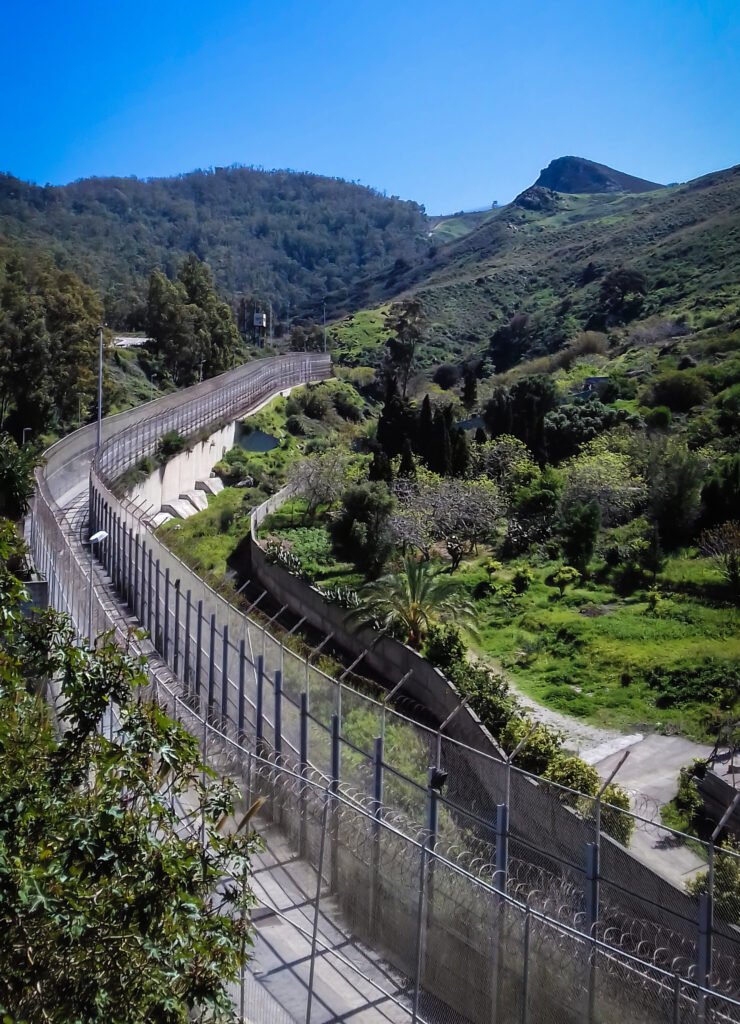
Following the erection of border fortifications in Spain’s North African enclaves of Ceuta and Melilla and the deployment of the paramilitary Guardia Civil to patrol border-fences, the EU and the Spanish government externalized policing to the Moroccan state. For more than two decades, Moroccan police have received training and equipment assistance under the umbrella of large-scale migration-related police cooperation schemes set up and financed by the EU Commission, Spain, the US government, and agencies such as UNODC.
Moroccan police have since regularly raided informal migrant camps in the forests nearby Ceuta and Melilla; conducted pushbacks or deportations at their neighboring border with Algeria and intercepted Spain-bound Moroccan and non-Moroccan harraga (the Maghrebi Arabic term for those who cross borders irregularly by “burning” them, commonly referred to in Morocco, Algeria and Tunisia as the harga) at sea.
The Moroccan example, vividly illustrates that contemporary migration control is a continuity of a centuries-old colonial logic. As Yazid Benhadda reveals in his 2025 academic research paper, the French colonial administration had already systematically criminalized Moroccan migration to France, “either through banning or regulating Moroccan mobility.”
Since the first legislative act in this matter was adopted in 1925, France imposed strict regulations on the migration of Moroccan workers’ to the metropole by: tightening passport issuance, limiting family reunification, conducting “repatriations,” and establishing police units in France itself charged with surveilling immigrants from Northern Africa. Moroccans, however, circumvented these restrictions through irregular means of travel to France via Algeria or Spain. At the same time, Spanish authorities cracked down on those who facilitated the irregular travel routes of Moroccans.
This policy strongly resembles today’s targeting of smugglers by European governments and UN agencies across Northern Africa and beyond. Benhadda highlights the striking fact that “this logic still governs today’s European migration policies and legislations towards North Africa, as we can observe the persistence of this regularity-irregularity nexus.”
Policing Cooperation across Northern Africa
Concerning today’s migration control regime, police cooperation schemes similar to those commissioned for Morocco have been implemented in Tunisia, Egypt, and Libya; providing the respective police forces with vessels, vehicles, thermal imaging cameras, surveillance software, and training. After all the aforementioned states had already been allocated equipment deliveries for migration control from EU governments in the 2000s, the 2011 uprisings across the region enforced temporary halts to those programs.
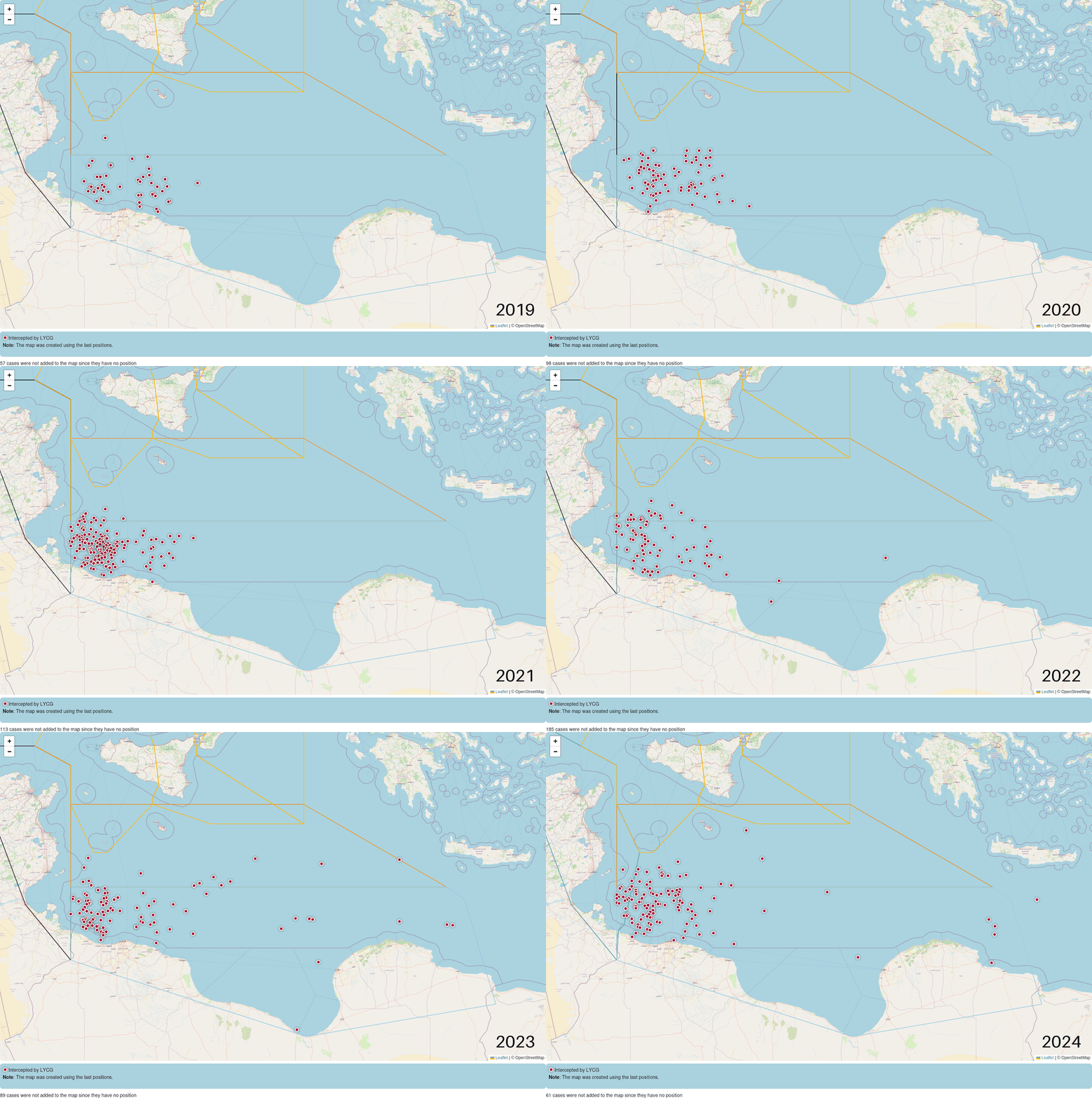
Since 2015, the EU has resumed such projects. In war-torn Libya, the Italian government with the support of the EU, supplied the so-called Libyan Coast Guards—a militia-run naval force affiliated with the regime in Tripoli—with substantial equipment and training aid to enable it to intercept harraga in the Mediterranean. The militia’s well-documented involvement in human trafficking, torture for ransom, sexual abuse, forced labor or arbitrary detention did not stop the EU nor organizations such as the border regime service provider International Centre for Migration Policy Development (ICMPD) to take sides in the Libyan tug-of-war for power, support the Coast Guards and their allies with equipment and thereby further externalize the EU border regime to African shores.
In Tunisia, Europe-funded police training and equipment aid continued after the 2011 revolt. During the political transition in the 2010s, police cooperation continued under the pretext of democratizing the security forces of the ousted regime. After 2015, however, migration control became its main purpose, with Germany and Italy being the frontrunners in supplying border technology to Tunisia.
Two large-scale police cooperation schemes, funded by EU states and coordinated by the ICMPD, facilitated the set-up of control rooms, the development of maritime surveillance tools, and the construction of two inter-agency police training facilities near the Algerian border.
Since 2021, the EU, Italy, and Germany expanded their police cooperation in Tunisia even further: increasing budgets for ongoing projects and setting up new programs specifically targeting the maritime branch of the National Guard—the main recipient of training and equipment aid from imperial Europe.
The National Guard is a key unit in Tunisia’s security apparatus, charged with a vast array of responsibilities, which include the patrolling of the country’s land and sea borders, as well as civilian crowd control. Human rights groups have, however, meticulously documented the unit’s involvement in widespread human rights abuses and deportations of harraga to Libya and Algeria, and their culpability in crackdowns against anti-government protests that challenged the country’s authoritarian rollback under President Kaïs Saïed.
In Egypt, the EU’s involvement in directly equipping and training Egyptian security forces dates back only to 2022, when the European Commission allocated an initial 23 million euros for a “border management” project, aimed at supplying the So’s regime coast guards with vessels, thermal imaging cameras, and more. An additional 87 million euros were allocated by the EU in 2023, while 200 million euros were earmarked for migration control under the umbrella of a 7.4 billion euro package announced in 2024.
Prior to the EU involvement, however, it was the governments of Germany, France, and Italy who supplied the Egyptian police with a vast array of equipment and training. After Italy had signed a police agreement with Egypt in 2000, Rome delivered patrol vessels to the regime in 2007 and supplied the notorious riot police unit Central Security Forces (CSF) with vehicles and firearms―equipment that was widely used against protesters during the 2011 revolution and the 2013 coup that brought President Abdel Fattah el-Sisi to power. France supplied the CSF with sophisticated crowd control vehicles since 2012, and thereby was directly complicit in massacres that the CSF and other police units committed shortly after the 2013 coup.
Under the guise of security concerns in the region and migration control, Germany and Italy expanded their police cooperation with Egypt in 2014 and 2017, respectively. In both cases, they supplied el-Sis’s regime with the policing and surveillance capabilities, used for systematic reprisals against all forms of dissent. German authorities, in particular the Federal Police, which are focused on airport security and certificate and document fraud, provided the Egyptian border police with document scanners, fingerprint devices, and other forensic equipment. The Federal Office for Criminal Investigations, a German police unit with intelligence capabilities, conducted training for Egypt’s political police, the National Security Agency (NSA), and awarded scholarships to its officers for training programs in Germany.
The Italian government, for its part, continues to support the Ministry of Interior and, in 2017, set up a police training center in the Police Academy in Cairo, where EU member states-funded workshops and seminars on migration-related subjects are conducted for police officials from Egypt and other African states.
Managing Borders for the Benefit of European States
Border externalization, as we have seen, does not only entail police cooperation and the supply of equipment and training. It involves a multitude of additional measures and tools to fortify borders more broadly. They stretch from data collection and the introduction of biometric passports to the adoption of anti-trafficking and asylum legislation, to the securitization of airports and ports, to the imposition of visa regimes. Even more, it refers to deportation and “repatriation” agreements, to “development aid” schemes, supposedly aimed at tackling the “root causes of migration” by improving access to potable water and health services or facilitating employment promotion in regions and countries considered prone to irregular migration.
This alleged “combat against the root causes of migration,” effectively aimed at containing uncontrolled migration, meanwhile, goes hand in hand with what the border regime industry often calls “skilled labour migration.” Intergovernmental programs claim to support the expansion of “legal pathways” for migrant workers through “talent partnerships” under which highly-educated job seekers can apply for labor migration to the EU, the UK, or the US, as well as to Gulf states such as Saudi Arabia or Kuwait.
While the development aid industry often merely provides charity schemes to alleviate poverty and contain people in the proximity of their residence, talent partnerships and other labor recruitment programs are, meanwhile, a backbone of what we largely call today “migration management.”
This notion, as prominently promoted by organizations such as ICMPD, consists of a holistic approach towards migration which entails two main pillars: 1.) The staunch combat against “irregular” migration including resolute deportation and repatriation practices, the criminalization of the harga, border externalization and the construction of walls, fences and other forms of border fortification; 2.) the targeted recruitment of migrant laborers to counter demographic trends and meet shortages in certain areas of the labor market. These seemingly contradictory objectives therefore provides for the state-imposed categorization and hierarchization of people, a precondition for capitalist wealth accumulation in the Global North and among elites in the South, as well as for maintaining Western Europe’s and North America’s advantageous positioning in a neocolonial, extractivist global order by promoting an increase of “immigration [to Western Europe] for economic and rational reasons, but always for the benefit of European states,” as summarized by Fabian Georgi.
Prominent anti-colonial figures such as Frantz Fanon had already unambiguously pointed out decades ago that “the wealth and progress of Europe” stems from the organized looting of the Global South. He warned that this resource theft would continue if decolonization in Africa and Asia fails to enforce real independence for Europe’s former colonies.
Today’s political and economic order, however, facilitates not only the continuous large-scale extraction of resources from the South, but also a kind of extraction of people, stretching from state-recruited migrant workers to harraga, who have often no other choice but to compete for low-paid jobs in sectors such as construction or agriculture across Europe, North America, the Gulf or other oil and gas-producing countries such as Libya and Algeria.
We are not witnessing a “migration crisis” in Europe today, but rather a decades-old migration and emigration crisis in the underdeveloped and indebted South, stemming from restructured power dynamics and postcolonial dependencies that were never fully overturned. While the ongoing genocide in Sudan and the West’s indirect involvement in the never-ending carnage in the Congo are today’s most prominent examples of resource-extraction-related conflicts, migration movements from the Indian subcontinent to Europe and the Gulf remain a primary mode of labor extraction for the benefit of former colonial states and their societies.
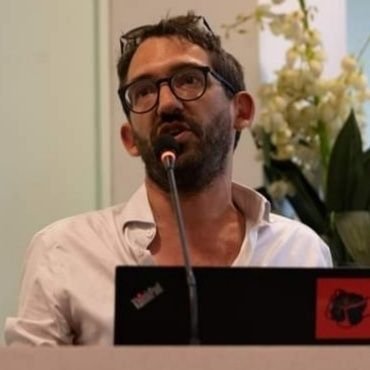
Sofian Philip Naceur
Sofian Philip Naceur is a Tunis-based journalist, working with the Rosa Luxemburg Foundation and various media outlets and NGOs. He has published extensively on Egypt, Algeria, Tunisia as well as border regimes in Northern Africa.