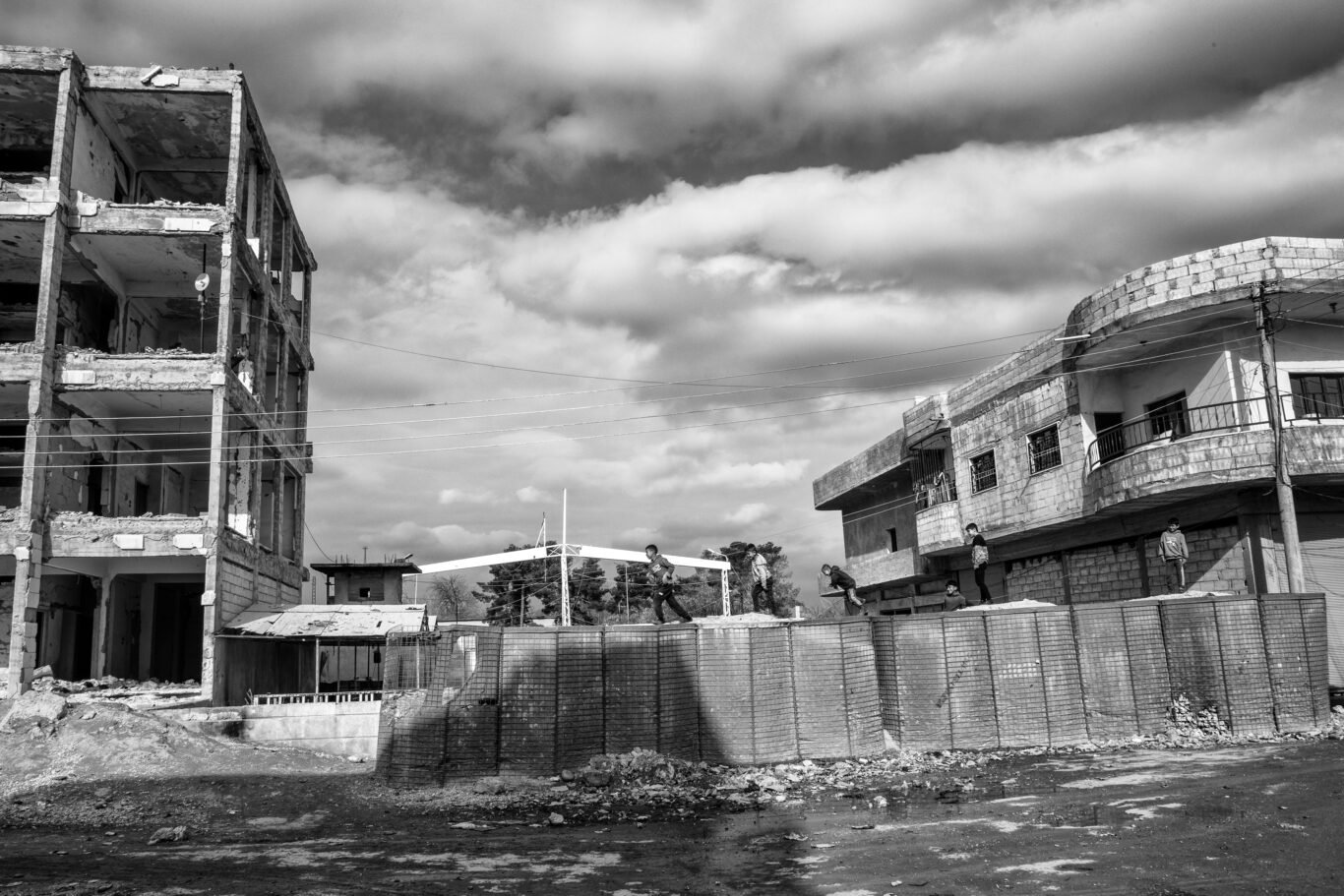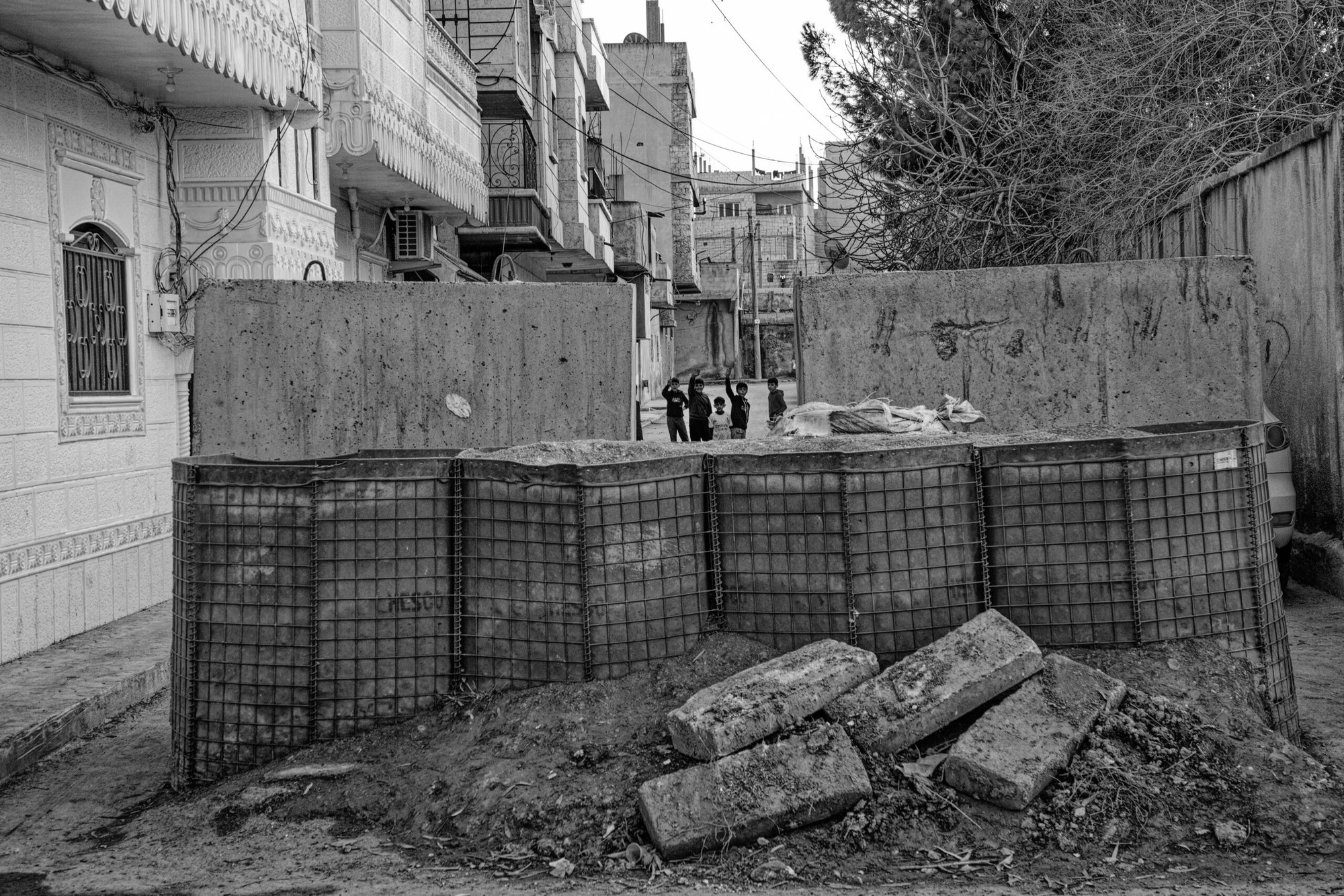



Cover photo:Kobane, January 2025. ©Maryam Ashrafi
To keep up with the rapid geopolitical changes, in February Turning Point is publishing video greetings from global hot spots. We look for informed local perspectives for what is actually going on, what is the atmosphere in the society, and what the rest of the world should know. In the third post, we hear from Mustafa al-Ali, a Kurdish journalist in the Syrian town of Kobane. The symbolic stronghold of Rojava Revolution remains practically besieged despite comprehensive agreement between the Syrian Democratic Forces (SDF) and the Hayat Tahrir al-Sham (HTS) led transitional government, allegedly due to the Turkish influence in the Syrian government.
Hello everyone, I’m talking to you from Kobani, and I want to tell you what’s going on in the city at the moment.
So basically, there has been a siege by the Syrian government on the town of Kobani for more than a month. Over 250,000 people have been displaced from the Kobani countryside, and now they are taking shelter in the schools and mosques. Unfortunately, those people are going through a really difficult time, and they don’t have access to any basic needs.
Especially back in the first weeks of the war, the situation was really terrible. Those people didn’t have access to any heat, didn’t have access to any gas, and there was a serious shortage of milk for the children. There has been some aid sent by the UN agencies and by some international NGOs, but unfortunately this aid was not enough and was not able to cover more than 20% of the people’s needs.
At the moment, the educational process in Kobani is completely stopped. Seventy‑one thousand students are unable to attend their classes because, as I told you, the schools are full of displaced people.
When we speak about Kobani, we have to remember the past of Kobani. We have to remember the story of Kobani, the story that the Kurds were able to defeat the Islamic State in the town of Kobani. Kobani was the turning point that made the link between the Kurds in Syria and the international community and the Americans. At that time, there was great cooperation between the Kurds and the Americans to defeat the Islamic State.
So today, when the attacks are going on in the city of Kobani, people really feel disappointed because everyone has this picture in their mind. I mean, we paid a great sacrifice to protect the international community and to protect the world from the Islamic State, and yet today we have no one to stop the attacks on us.
Everyone is asking this question. There should be actions by the international community to protect and guarantee the Kurdish rights in the future Syrian state. We know there have been great demonstrations in Europe and in other places, and there have been really serious statements, but unfortunately statements are not enough. Action needs to be taken to protect the locals here.
The story of Kobani is the same story as the Kurds in Syria, who didn’t have any rights during the former regime of Al‑Baath. For example, the Kurds were not allowed to speak their language in the schools. I’m one of those people: I speak English, I speak Arabic, I speak Kurdish, but unfortunately I’m unable to read and write in Kurdish because, as I told you, it was not allowed for my generation and for the generation before me to speak our mother language.
Today we are looking to the future of Syria, and we hope that the Kurds will be recognized in the Syrian constitution. We hope that they will be able to have and save their political and cultural rights. There were more than 300,000 Kurds who did not have any citizenship because the Syrian regime took the citizenship from those people, and those people are based in Heseke and Qamishlo. So imagine being a citizen in your country and you are stateless.
There has been an agreement between the Syrian Democratic Forces and the Syrian government, and everyone hopes that this agreement will come to a successful end, that the new government of Syria will recognize the Kurdish rights and will recognize their existence in their area. This is the goal and the aim for all Kurds in northeast Syria.
We hope that the war will end because the Syrian people in general are tired of the wars. There have been 14 years of war, not only in northeast Syria but in all of Syria. So we hope that this is going to end, and we hope that there will be a brighter future for all the Syrians, including the Kurds, in a country that protects its minorities, a country that protects the rights of all its citizens.
So this is what I want to tell you, and my message to you is: be on our side, write about Kobani, write about the Kurds, until we have a country that is safe for everyone. Thank you all.