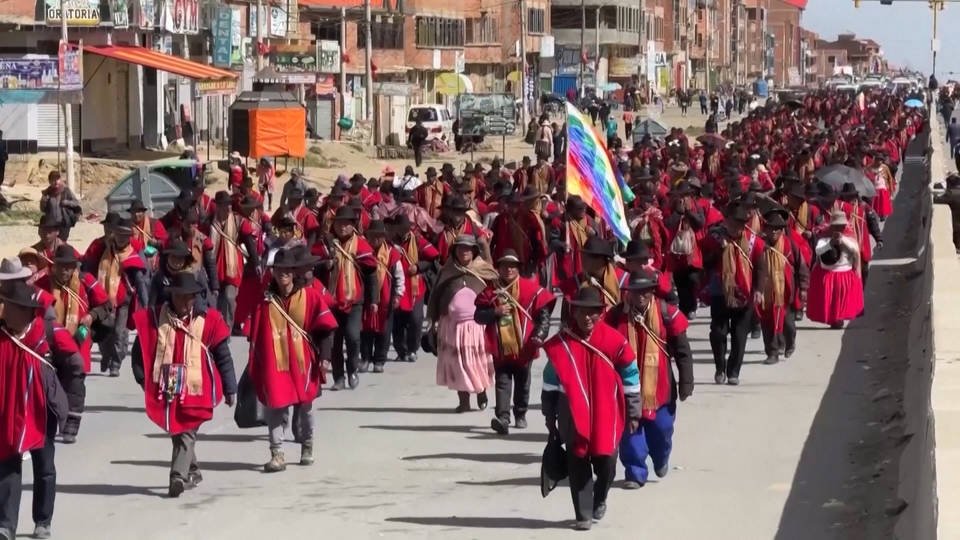
The Bolivian government deployed over 3,500 soldiers and police on Saturday to tear down road blocks that have isolated La Paz amid a paralyzing nationwide strike. Dubbed Operation “Humanitarian Corridor,” the crackdown began only 24 hours after the government reached a tentative deal with miners, a key faction in the protests alongside farmers, other unions, and Indigenous organizations.
After violent clashes and 57 arrests were reported across the La Paz region, the Bolivian Workers’ Central (COB) and other groups vowed to continue the mobilization. According to traffic authorities, 22 blockades are already re-erected on vital transport routes, leaving hundreds of supply trucks stranded again.
The two-week wave of civil unrest has become the most severe challenge to President Rodrigo Paz since he took office last November after decades of Movement Toward Socialism rule. With the capital isolated and supplies running low, Argentina’s Javier Milei dispatched two military transport planes carrying humanitarian aid earlier this week, a move the far-right leader framed as helping Paz to “stabilize the situation.”
Driven by a severe fuel crisis, austerity policies, and inflation, the protest movement demands a 20% minimum wage increase, subsidies, and an end to the privatization of public assets. On Wednesday, the government backed off from a controversial agrarian reform that would have enabled mortgaging small farms, but failed to calm the protestors who now call for his resignation.