Cover photo: Greece, Megalo Seitani Beach Landing, October 2023. Despite its isolation and the absence of nearby emergency services, the beach continues to be a common landing point for asylum seekers. ©Thomas van de Water
It’s a blustery day on the Greek island of Samos as we tip into Autumn. The blue sky holds little heat. The sea is just choppy enough to be uninviting. The boat Khalid arrived on is still tied up in the small harbor, black rubber and sturdier than most. His group survived the crossing, but in the last year alone nearly 100 people lost their lives on their way to the Aegean islands from Turkey. The fact that Samos is only 400 meters from its maritime neighbor conceals the reality of the passages cross-currents and high winds; making what may appear a placid sea, as wild and unpredictable as any other.
Khalid was born in Saudi Arabia, but like many Palestinians without citizenship, he was forced to leave when he turned 18. He was a refugee by birth long before this current displacement and only knew Gaza from short visits. From Saudi Arabia, the family had to return home to Khan Younis in order to stay together, but for Khalid, this would turn out to be only the beginning of a journey, which would take him to Egypt, Jordan, Turkey, and finally Greece.
At home in Gaza
It was 2019 when he returned with his family to Gaza, the year before the COVID-19 pandemic would give Israeli tech companies, such as Viisights, the chance to test new AI-driven behavioural recognition technology on Palestinian and Israeli crowds in the name of monitoring social distancing and other contagion factors. The very same tech would later be deployed in the Samos Closed Control Access Centre (CCAC), where Khalid would be placed upon his arrival to the EU.
Back then Khalid had no thoughts of leaving his home and his family: he was busy pursuing his dream of becoming a pharmacist. When the war started in October 2023, he was entering his final year and was looking forward to qualifying. In Gaza, following a dream is not so easy—his mentor, Dr. Muhammad Ashame, who had guided his education, was killed during the first months of the genocide, shot down while simply walking in the street.
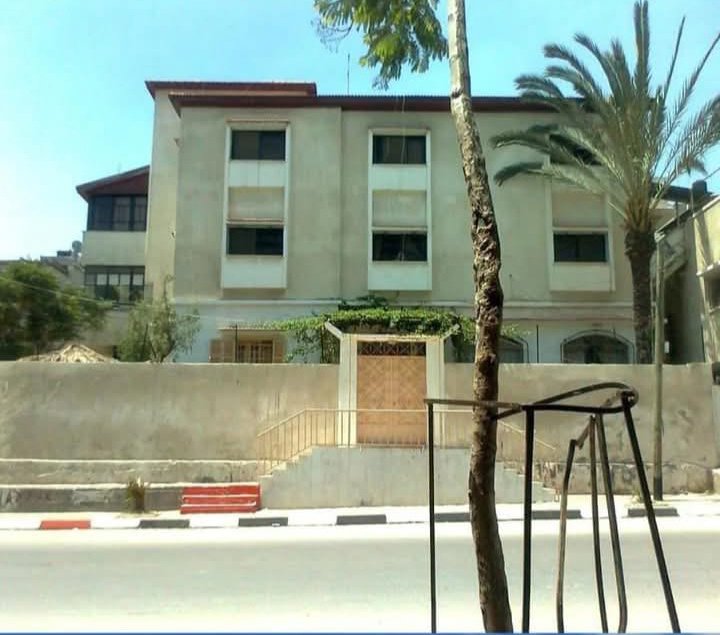
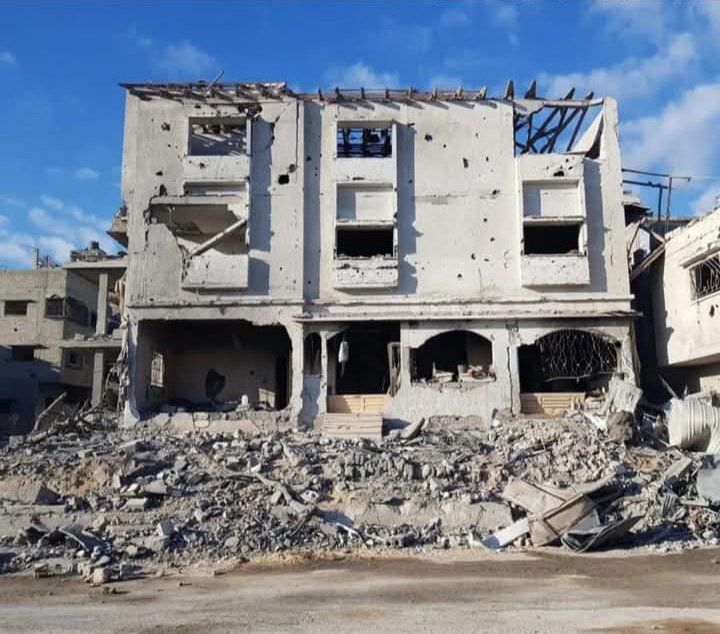
When Khalid’s father also passed away, responsibility for the wellbeing of his family fell on his shoulders and took precedence over any other plans he may have had. During one of the first offensives on Khan Younis, a warning was sent by the Israeli army, but it did not give the family long enough for all 12 people in their house to pack their things. Their father, the last to leave, was trapped when the house next door was bombed and collapsed onto their living room—destroying their home and their lives. Khalid and his brother had to search with their hands for their father’s body. When they finally found him under the rubble, Khalid began CPR, enabling them to get him to the hospital. Sadly, by the time they arrived, it was already too late, and despite medical care, he passed away. His last words to Khalid, his middle son, were that the family was now his responsibility.
Leaving home
After his father’s death, his family urged him to leave, to carve a path abroad so that their future might survive. With no safe passage available, he was forced to smuggle himself out of Gaza into Egypt, a difficult and expensive task.
“If my father were still alive, I would never have left.”
In Egypt, he was issued a Palestinian travel document that allowed him to stay for only 72 hours, despite having family there. These documents are given on arrival to all people arriving from Gaza. His only choice was to go to Turkey on a tourist visa, but this only lasted a month. While in Turkey, he sought permission to stay there legally four times, but it was never granted; instead, he ended up in prison for being undocumented. This was not a life that would allow him to fulfill his father’s wish to look after the family. He needed stable work, he knew he had to leave to find it, but he did not have enough money.
In the end, the final part of his journey became possible thanks to a mix of luck. A man who accidentally ran him over in his car, gave him the money he needed to pay for his journey onward. He also gave him a safe place to stay and eventually they became friends.
“He paid me compensation, helped me with medical support, and turned out to be a very kind person.”
As a Palestinian in Turkey, there was only one way for him to get to Greece, crossing the border by any means possible in order to reach a country where his asylum claim could be heard. Khalid did not trust the smugglers but felt he had no choice.
“They take advantage of people and sell a dream of Europe.”
It was not long before he faced the reality of this dream. During his journey from Turkey to Greece, the coast guard chased them and shot into the air. Pursuits such as this one have led to boats capsizing on multiple occasions and recently two deaths off the coast of Rhodes.
The Camp
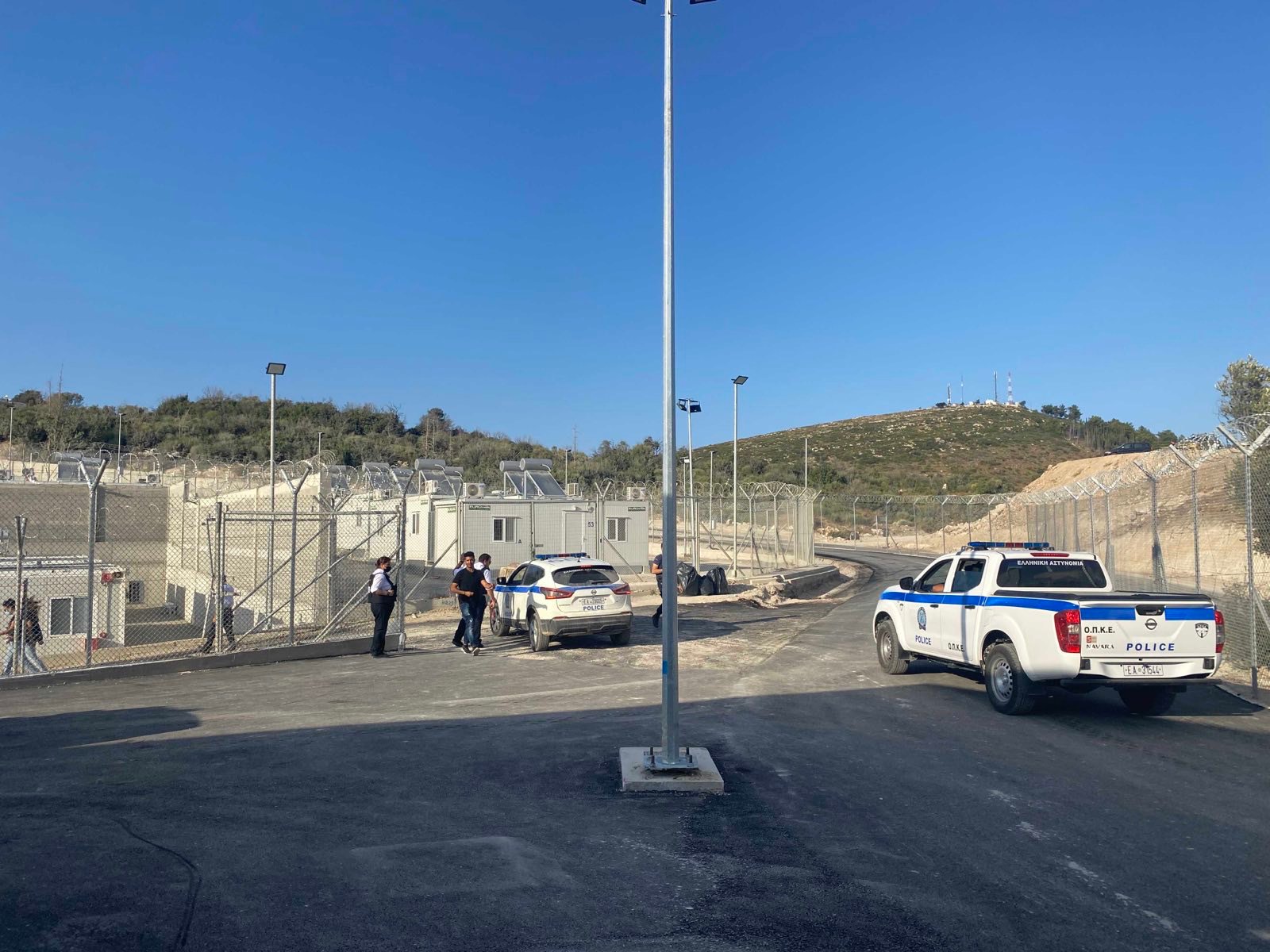
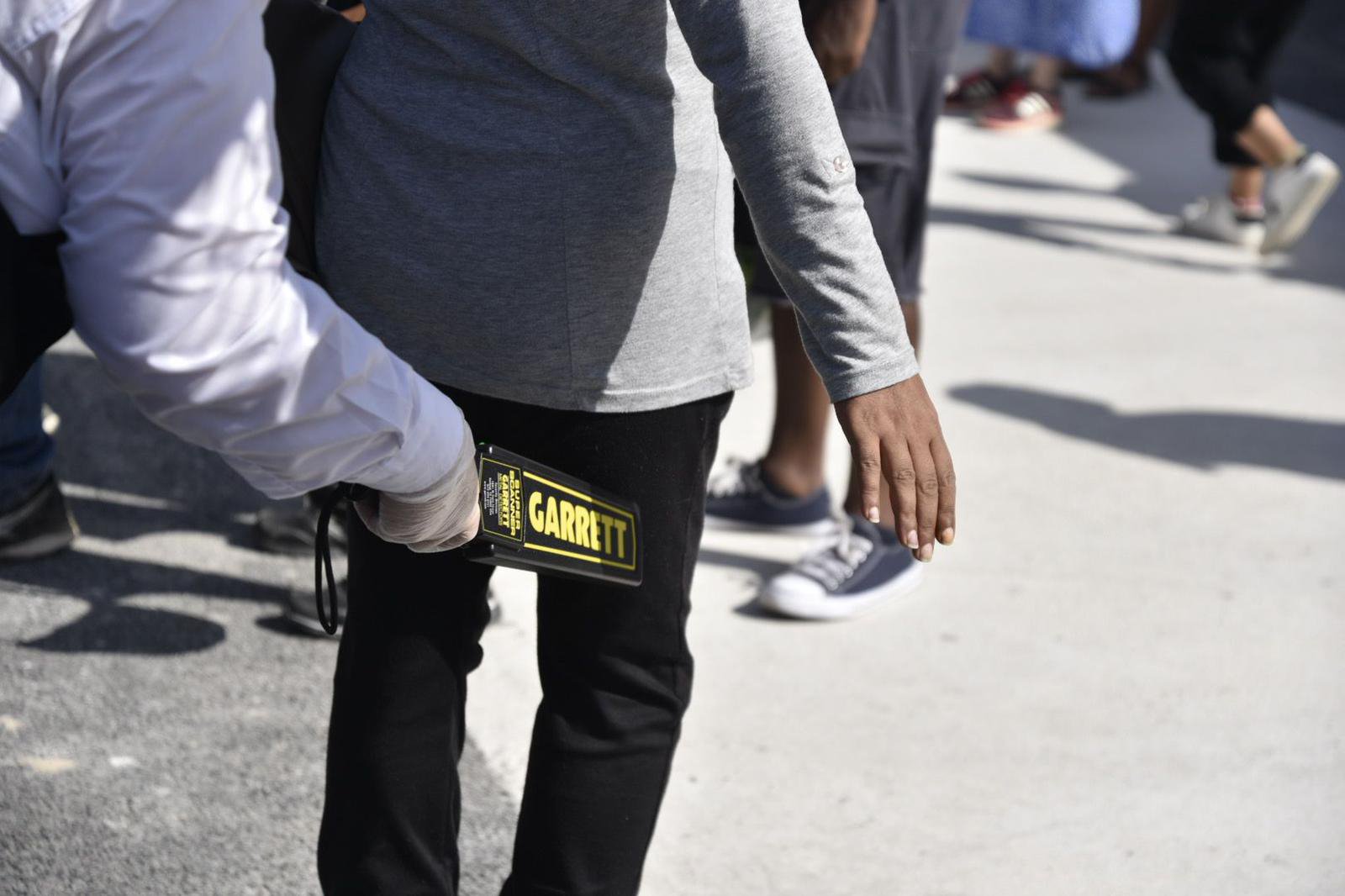
Khalid and the group he was with landed on the small island of Nera and were then transferred to the larger island of Samos. In Samos he had to live in the CCAC, located seven kilometers from the city of Vathy, in order to be registered and make his asylum claim. Since this EU funded camp opened in September 2021, human rights groups have consistently reported on the use of unlawful detention, substandard conditions, inadequate food provision, which in the last year led to diagnoses of severe malnutrition in children, and the camp’s ‘prison-like’ environment.
Khalid was held in the isolation area of this camp for over two weeks; an exceptionally long time, most are there only for a few days. During this period of de-facto detention in containers where people are often not given even a bed to sleep on, the food made him so sick that he ended up in the local hospital with a salmonella diagnosis.
In the CCAC Khalid’s life was overseen by Centaur, a surveillance system which, according to reports published by grass roots NGOs I Have Rights (IHR) and the Border Violence Monitoring Network (BVMN), deploy CCTV cameras and aerial drones to collect image, video and audio data in the CCAC to flag the movements of people inside and alert authorities if there is a risk of perceived aggressive or hostile action. There are at least three Greek companies involved in the system: ESA Security, Space Hellas, Adaptit and two Israeli firms: ViiSights, who we met earlier and who now deploy their behavioral analytics systems throughout the entirety of Israel’s first smart city, Eilat, and Octopus.
Octopus, according to academic Chris Hables Gray, has multiple direct links to the Israeli Army; the perpetrators of the Genocide that Khalid escaped, a fact which surely raises concerns for people’s safety and security. Palestinians fleeing Gaza are seeking protection from the state where these companies are based and with whom they work.
As reported by IHR and Homodigitalis, in 2024, the Hellenic Data Protection Authority (HDPA) found that the Ministry of Migration and Asylum’s use of surveillance technologies in reception facilities across Greece, including biometric access systems and surveillance infrastructure tools, violates EU data protection laws (GDPR).
Between Gaza and Greece
Today, Khalid works in Greece’s tourist industry in a small hotel serving coffees, while waiting to hear about his asylum decision. One of the benefits of the job is that it has allowed him to leave the camp and live something approaching a normal life. It is not the job he dreamed of and he hopes to continue studying when he receives his papers. Meanwhile, he is sending every euro he earns back home to his loved ones. Even this, however, is not easy:
“Because of the dire situation, there are dishonest people exploiting the crisis. They have the necessary funds, and since all banks are out of service, we are forced to send money through them in exchange for half the amount. For example, if you want to send 1000 euros, they will take 500 euros. Unfortunately, there is no other way to send money to Gaza right now.”
Yet, no matter how far he travels or how hard he works, he knows he will never truly feel at home until the day he can return to his family and to Gaza. At this moment, the Gaza Strip exists within the fragile ceasefire agreed on the 9th of October, and during which at least 211 Palestinians have so far been killed by Israeli strikes. The question that now becomes apparent: what is there to return to? The enforced loneliness of this exile clearly weighs heavily on Khalid, but he feels he has no choice.
“What real home can there be without family? Sometimes I imagine my mum with me, sometimes my sisters.”
According to the UN, up to 92 percent of all residential buildings in Gaza have been destroyed—there is nothing simple about the idea of returning home. There is long-term rebuilding to consider, winter shelter for the interim, and the impossibility of earning enough to buy the materials needed in a destroyed economy. Those who managed to get out may well have to stay away for longer just to earn the money to rebuild the homes they left. And this, all on faith that the ceasefire will hold. Until Palestine has independence, it survives at the whim of Israel, the country which, according to the UN, is committing a genocide against the people of Gaza and illegal actions under international law against people in the West Bank, including illegal settlements on Palestinian land.
According to some estimates, ten percent of the population has been killed or injured during the genocide, and more bodies are being rescued from the rubble every day. The actual death toll of the last two years may never truly be known, between mass graves and bodies lost in the destruction, combined with the subsequent famine and lack of healthcare—there is no one in Gaza who has not been affected by the war.
Khalid worries for his mother, who suffers from diabetes and high blood pressure, for which she hasn’t been able to receive proper medical care:
“Whenever there is a ceasefire or a temporary agreement, the Israeli side promises to open the Gaza border so that people can get medical support and food, but they usually close it again after just a few hours.”
The lives lost during the genocide are all irreplaceable, and though their remains may be returned to their families during the many months of excavations that lie ahead; their futures, the roles that they would have played in Gazan society, have gone forever. Khalid’s father was the organizing structure in their lives, and now, every day, they must learn anew how to continue without him.
After the genocide in Gaza the nature of what comes next has been irreparably altered. Whatever is rebuilt from the ashes of Gaza’s cities and villages, paid for by the labour of Palestinians like Khalid, exiled from their home to make their own return possible, it will never be what was lost—it will be something new.
Emma Musty
Emma Musty is a prize-winning writer currently living on the Greek island of Samos, where she coordinates a human rights project which gives free legal advice to people seeking asylum in Greece.
Khalid A.
With experience working in humanitarian and communication-oriented environments, Khalid is engaged in roles that focus on language support, coordination and facilitating understanding across cultural contexts. His work reflects a commitment to clear communication, professionalism, and human connection, developed through collaboration with diverse teams and international settings.