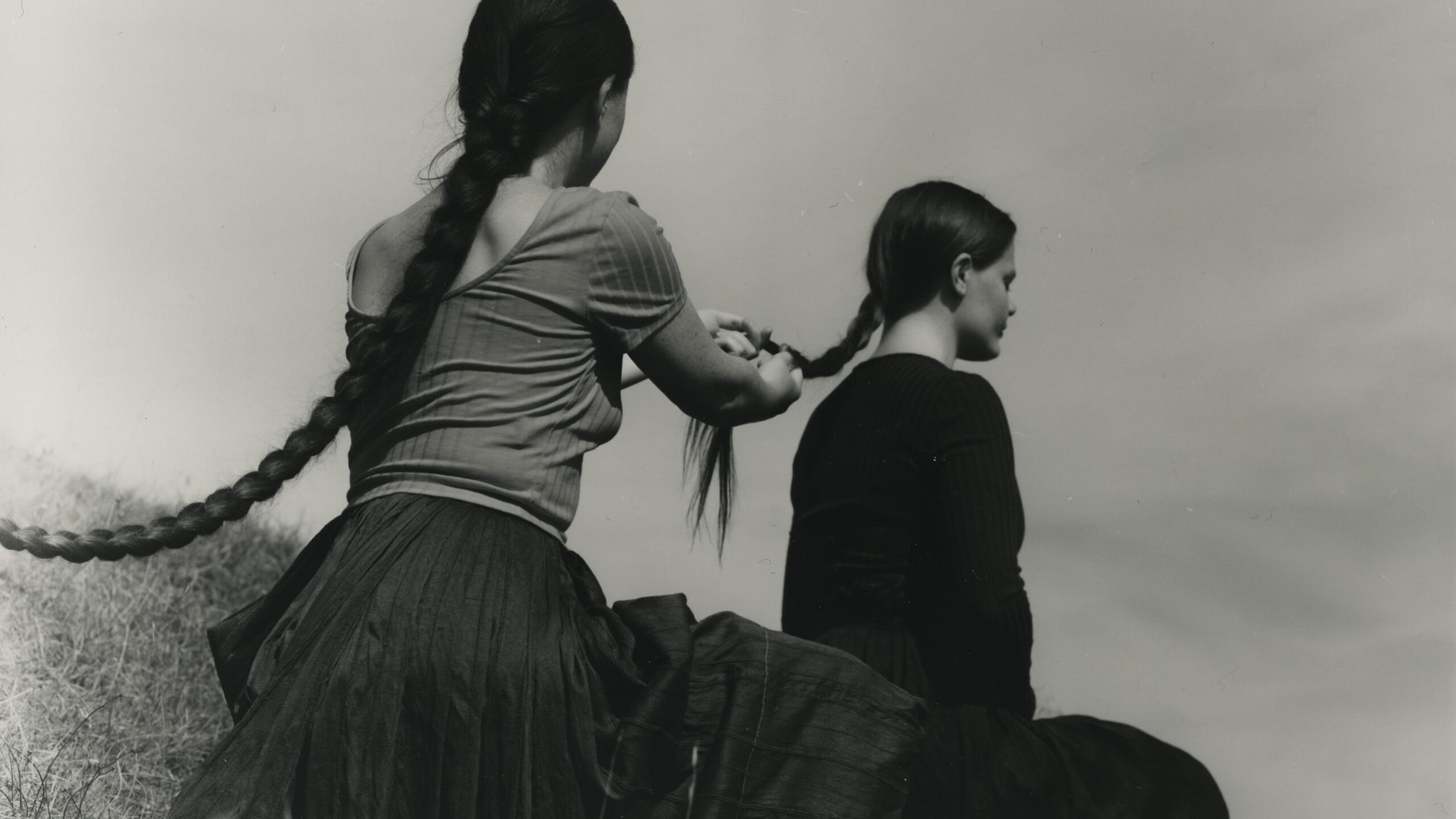



Cover photo: Homage to the Women Life Freedom movement inspired by the YPJ. 2021. ©Ellen Jane Rogers
In Gaza’s rubble, women gather fragments of their children’s bodies—a harrowing reality that news cameras capture but fail to contextualise within the collective resilience and life-making work that women continue to lead amidst systematic destruction. This is Sumud: active commitment to life that persists even when the enemy seeks to strip away every vestige of humanity. It means treating the dead with dignity when the living are denied water, food, and shelter. In Sudan, women navigate politically engineered famine, creating networks of survival that transform scarcity into solidarity. Across Iran, Kurdish and Baluchi women not only resist the Islamic Republic’s brutality but fight for the democratic future that repression seeks to foreclose. In refugee camps across Southeast Asia, Rohingya women and girls organize against multiple forms of violence and degradation to exercise their collective agency. Across continents, Indigenous women defend territories whilst building alternative governance systems rooted in ecological wisdom.
These women and girls illuminate a crucial truth: we are not condemned to choose between competing empires of killing. Against US imperialism, Israeli settler colonialism, Turkish occupation, Iranian theocracy, women worldwide demonstrate that a third way exists, one grounded in life and freedom rather than domination and extraction.
The Kurdish women’s movement declares “Niha Dema Jinan e”—Now Is the Time for Women—to mark International Women’s Day recognising that feminist women’s leadership offers the only viable path through civilisational collapse. The testimonies we publish this month, from administrators managing camps holding ISIS families to Indigenous land defenders in Bangladesh and the Philippines, reveal both the systematic nature of patriarchal violence and the systematic nature of women’s resistance to it.
The testimonies we publish reveal a stark pattern. Wherever capitalism, militarism, and patriarchy promise security, they deliver its opposite: displacement, surveillance, sexual and many other forms of violence, ecological devastation, and the atomisation of communities. What passes for security becomes crisis management, not its resolution. Armed checkpoints and walls sever kinship networks and cannot restore them. Walls cannot withstand bombs and delay and prevent rescuers reaching those whose lives have already been shattered. The architecture of protection becomes the infrastructure of control.
Yet, within these same territories the people generate alternatives. In Rojava, women’s self-defence units and democratic confederalism demonstrate what feminist security looks like in practice: community care over individual accumulation, ecological balance over extraction, collective decision-making over hierarchical command. This isn’t theoretical; it’s practical politics under siege. When state structures collapse or turn predatory, communities create new forms of governance rooted in interdependence and mutual aid.
The young Indigenous women of Southeast Asia demonstrate similar innovations. As extractive industries militarise their territories, turning Bangladesh’s Chittagong Hill Tracts and the Philippines’ Mindanao into security zones for corporate profit, they respond not with appeals to distant capitals but by building educational networks, documenting violations in real-time, and linking local land defence to global climate justice movements. Marma, a 26-year-old activist who carries her handwoven bag to international forums, embodies this strategy: culture as resistance, memory as politics, tradition as innovation.
Five young Rohingya feminists emerged as leaders and formed Rohingya Maìyafuìnor Collaborative Network (RMCN), a Rohingya-led, women-led, and refugee-led organisation working across human rights, sexual and gender-based violence, education, narrative change, and translocal solidarity,
These transnational feminist approaches recognise what states cannot: genuine security emerges from below, not above. It grows from access to water, not weapons systems. It strengthens through women’s participation in governance, not their exclusion from peace negotiations. It develops through cultural continuity, not erasure. When Indigenous women labour to preserve their languages, when Kurdish fighters establish women’s councils whilst defending territory, when Palestinian feminists theorise liberation whilst under bombardment, they demonstrate that survival and transformation are not sequential but simultaneous.
The woman we profile this month illustrates this complexity. Managing camps holding ISIS families in Northeast Syria requires extraordinary compassion toward suspected perpetrators of genocide, care for their traumatized children, and unwavering, ethically-grounded discipline to enforce security precautions and long‑term de-radicalization strategies. Her labour, invisible to international headlines but essential to regional stability, exemplifies the gendered work of reconstruction that feminist analysis brings into focus. Security, she understands, is not the absence of conflict but the presence of justice.
This is why our upcoming conversation between Palestinian, Kurdish, and Japanese feminists matters. Each context generates distinct strategies, but the underlying framework remains consistent: real security cannot be militarised because militarisation destroys the conditions for security. The settlements expanding across Palestinian land, the military bases dotting Okinawan shores, and the surveillance drones patrolling Kurdish skies serve identical functions: normalising occupation as peace, compliance as consent, and extraction as development.
The forces arrayed against this vision are formidable and coordinated. Patriarchal authoritarians worldwide have united in treating women’s bodies as battlegrounds and extractivism as the economic strategy that is destroying them. The resurgence of fascist movements from Germany to Myanmar reflects not isolated national phenomena but a systematic response to the crises of capitalism and climate breakdown. When traditional legitimacy collapses and the peoples rise up against illegitimate rule, violence becomes governance.
Concurrently, the same interconnectedness enabling authoritarian coordination creates possibilities for transnational resistance. Jin Jiyan Azadî, which originated from Kurdish women on the streets in North Kurdistan, travels from Iran’s uprising to feminist demonstrations across continents. Indigenous land defence tactics developed in one forest inform strategies in another. Digital networks enable real-time solidarity between communities separated by militarised borders. Women’s movements are mapping alternatives collectively, refusing the boundaries that states insist are impermeable.
The crisis of our time is also its opportunity. The old order is collapsing under the weight of its own contradictions, creating space for new forms of politics to emerge. Women’s movements worldwide are not waiting for permission to begin building alternatives. They understand what Kurdish democratic confederalism and Indigenous governance systems have always known: that sustainable security requires decentralised power, ecological balance, cultural diversity, and women’s leadership.
From the camps of Northeast Syria and Thailand to the forests of Bangladesh, from the mountains of Kurdistan to the bombed hospitals of Gaza where doctors operate by torchlight, women continue the work of creating life amidst systematic destruction. They plant gardens in refugee camps, teach children in bombed-out schools and makeshift classrooms, document testimonies whilst dodging snipers, and build democratic institutions whilst under siege. In Iraq, Yanar Mohammed spent decades building the Organization of Women’s Freedom in Iraq until her assassination in March outside her home, another reminder that feminist women’s leadership threatens those who profit from chaos. Their labour proves that another world is not only possible but already emerging in the spaces that power abandons or cannot control.
The time for women is indeed now. Not as victims to be protected by the same systems that endanger them, but as the architects of a civilisation organised around care rather than conquest, interdependence and mutuality rather than domination, and justice rather than the management of injustice.
We dedicate this month’s work to Yanar Mohammed, whose life embodied the refusal to accept that women must choose between safety and freedom and that neoliberal capitalism is the only viable economic system. Her assassination reminds us that those who build alternatives to patriarchal violence become targets precisely because their vision threatens the foundations of organised brutality. Her legacy lives on in every woman who refuses to surrender the future to those who eroticize violence and worship killing. Their blueprints are written in every act of defiance, every moment of dignity preserved under fire, every garden planted in the rubble.