



Elif Sarican (Turning Point editor): Hello and welcome to this Turning Point magazine conversation. It’s the first of its kind where we’re exploring conversations and bringing different perspectives to you through audio.
Turning Point magazine is an independent online magazine created by and for those actively seeking radical change. The magazine works with monthly themes which are explored with various forms of expression, usually in writing but also through video and now through audio.
The March 2026 theme is broadly speaking women’s resistance with a focus on insisting on life and freedom and on transnational feminism challenging what is called the culture of killing, particularly in the context of both increased imperialist violence around the world with the pretexts of protecting women but also at the same time of state violence and patriarchal societal violence increasing against both women individually and organised women.
So we’re really happy to bring this conversation to you and very privileged to have Margo Okazawa-Rey who co-edited this month’s editorial with us and will be facilitating this conversation.
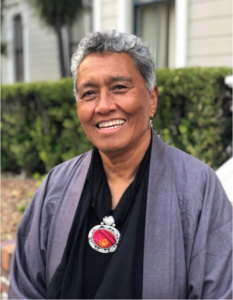
Margo Okazawa-Rey: Thank you so much Elif. What a day, what a time in history. I’m 76 years old, I’ll be 77. I’ve not seen a time like this. And so those of you who are in your respective places know this better than I do. So I want to acknowledge that and acknowledge all the lives that have been lost, that have been disappeared, people who have been killed and also all the ways that feminists specifically in the locations that are represented in this broadcast—all the ways that nobody’s giving up and there’s ongoing struggle. There’s division and resistance and not just resistance but generating a vision, generating possibilities even when things seem so bleak.
So I want to acknowledge all those things before we start and again to thank each of you for being here and taking the time to have this conversation. Our time zone is all the way from the US Pacific to Japan which is like 7.30 in the morning and 11.30 at night although we’re all on the same day. So thank you to everyone.
Why don’t we just start with each of you just saying a little bit about who you are and why this conversation matters to you. You know, what’s important about this conversation that you’re taking the time out to be here. And why don’t we start with the latest time zone. Yuuka san, I don’t want you to fall asleep.
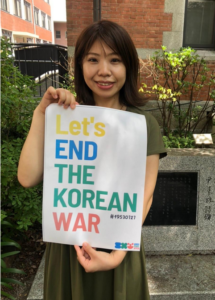
Yuuka Kageyama: Thank you very much Margo and Elif for inviting me. My name is Yuuka Kageyama. I am a member of the Women’s International League for Peace and Freedom (WILPF) Kyoto and International Women’s Network Against Militarism. We are a feminist group based in Kyoto, Japan. We are challenging Japan’s militarism and its impacts, and also the impacts of US military presence, especially in Okinawa.
I have seen many feminists from Okinawa and all over the world including the communities of US military bases, including in South Korea, Puerto Rico, Hawaii, Guam, US, the Philippines. And for me, the reason why I continue this work is I see many sisters who are struggling but also resisting and creating another way to live, another way to think about security. And by seeing their consistency, that is the strength for me to continue. And this also gives me joy to continue this work. And that’s why I am here today. Thank you very much.
Margo: Thank you so much, Yuuka. Meral please, welcome.
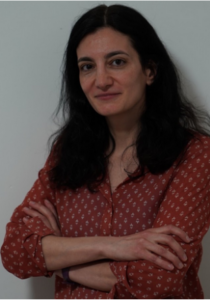
Meral Çiçek: Thank you, Margo. You know, the Kurdish Women’s Movement, since the beginning, always had a very clear focus also on the situation of the women in the world. I mean, in the Middle East and especially in the world. So there is a very strong dialectics in her perspective between the local and the global or, let’s say, the specific and the universal.
Because of this, I myself have also been working on a more international level on behalf of the Kurdish Women’s Movement with different regional or international women’s alliances, because we have a really strong belief that we need to work together. We need to build democratic alliances, feminist alliances, while recognizing also the differences we have, but trying to look at what is our common level: what is the common goal and concentrate to struggle in order to realize our common goals.
Therefore, as a person and as a representative of the movement, for me, it’s very important to get in touch with women that are struggling in different parts of the world to get a better understanding of myself or the situation in my country. You know, because I think you need to compare in order to understand your own situation, to get a better understanding of this.
Therefore, I really appreciate this gathering, even if it’s online. To get the opportunity to listen to you is a very, very great point for me, especially a couple of days after March 8. Thank you.
Margo: Thank you. I’m so emotional listening to you all speak, so don’t mind me. Rola, please.
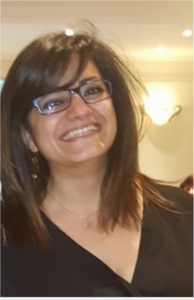
Rola Al Masri: Thank you, Margo. Hi, everyone. My name is Rola Al Masri, and I just start by saying hi to a fellow Wilpfer, Yuuka. I also work with WILPF at the International Secretariat.
One of the discussions that I’m looking forward to having [with you] and learn from you is with this connection which you, Margo, just introduced us to each other while we work in the same movement. I’m a Palestinian and Lebanese, and I moved to the United States in 2018. And from my positionality in working with WILPF, the Women’s International League for Peace and Freedom, I sensed personally, but also politically, what it means when you are connected to struggles—you are physically not in that context, but you are still. You know, even if our bodies are not there, our minds and our hearts are in those contexts. Working also with movements in Syria and Afghanistan and Lebanon and Palestine and other contexts, I think what from my work, but also from what I’m looking forward to this discussion is looking at cross-border ”beyond solidarity” even, which I have a few thoughts around down the line. But this is something I’m really looking forward to for us to unpack. What does it mean when we connect across not only our common struggles and shared struggles, but also across borders? I stop here, but I’m looking forward to listening and hearing and unpacking and plotting together.
Margo: Thank you so much, Rola. Yasmin, please go ahead.
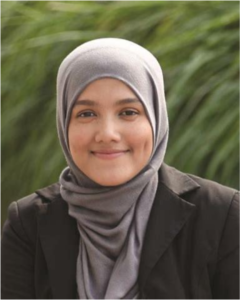
Yasmin Ullah: Thank you so much. I’m so excited to hear the conversation that’s happening today as well. My name is Yasmin Ullah. I am part of the Rohingya Maìyafuìnor Collaborative Network. The first, but hopefully not the last of its kind of Rohingya feminist collectives. We work globally to uplift the Rohingya community from various different situations of displacement and impacts of genocide.
I myself am a genocide survivor from the 90s, and I was displaced for a long time. I think that really helps inform the kind of advocacy that we do at the network, knowing and understanding deeply what kind of impacts gender or any other intersection of marginalizations have on, you know, on refugees, on being a displaced person.
So I think that the conversation today, I’m really looking forward to learning more, but also sharing more about, you know, the reason why Rohingya women come into this work is merely because our grandmothers and our great grandmothers were actually very involved in peace building. But that’s a lost art or a lost science now because of the displacement. We don’t see the side of Rohingya women’s resilience and the fierceness that we hold within us. So I’m really hoping that we can do a little bit more unpacking around that so that we can revive it together. Thank you.
Margo: Thank you. Now you all can see for yourselves why we’re together and why for each of you is so important to be in this conversation. So I sent you a list of questions and we don’t really have to stick to all of those. Why don’t we start from a slightly different place: tell us about the ways in which in your respective locations the resistance and the transformational work is happening?
And then we can go back to the problems. I think we often start with the problems, but I’d like to start with what’s happening. Yasmin just mentioned the grandmother’s legacies, for example. Talk to us about the resistance, the generative work you all are doing, the visionary work, and then we can work backwards. Is that okay with everybody?
So maybe think about our grandmothers or great grandmothers, our mothers, other women who have influenced our lives—and yourselves, obviously. What do you want our listeners to know about the work that’s going on in your respective locations? The generative work, empowering work. And anybody can jump in, please.
Yasmin: On the side of Rohingya and Myanmar as a whole country, there has been, you know, a woman’s hand or another marginalized person’s hand all over any progress that we have within the country. Especially within the context of the fight against impunity or the fight against the military regime, women have always been trying to kick down the door and be involved in the process—the quote unquote peace process. Unfortunately in the international or the global community they laud that as an important process, but when it continuously excludes women or other marginalized communities, it never lasts.
That is the reality on the ground, but women continue to be at the forefront. We have been fighting the fight against impunity for the past decades. And I have [met] so many women who’ve led the charge in this.
We are currently only able to actually continue the conversation around the global imperialist forces that want to extract resources within Myanmar or any other extractive practices within the country that goes on to line the pockets of the military who continue to oppress us and use those funds to be able to buy up weapons and ammunition only because the groundwork had been done by a lot of our grandmothers and great grandmothers.
And they continue to this day. We have these traditions and practices of so many wonderful women from Myanmar, like the Saffron Revolution, which is basically a challenge to the military because it’s such a patriarchal and misogynistic institution that a woman’s lower garment or a woman’s skirt is considered a dirty piece of garment.
And so women actually used it to string across the street in order to stall the military or the security forces from being able to enter a certain area or from being able to come and arrest the people right away. Because what they do is they stop because they don’t want to go under it because women’s lower garment is considered dirty. They would stop and actually try to slowly unstring it. And you’d see these in photos and videos. Even that alone is so inspiring.
I really hope that we can continue to celebrate and continue to actually talk about these kinds of practices that women in Myanmar and Rohingya women are doing to fight against all kinds of systems of oppression that we’re dealing with.
Margo: And just two points. Women, even the Nobel Peace Prize winner Aung San Suu Kyi, played an important part promoting or at least looking away at the genocide. Isn’t that the case also?
Yasmin: Yes, that is the case. Unfortunately, we have women who are wonderful, but we also have women that are part of the establishment.
Margo: The state feminists, right, who play a really important part in keeping things going. So thank you for that. And the women in Liberia also use traditional cultural practice to bring the opposing sides together during the civil war. So thank you for raising that point about culture and peacemaking.
Rola: I’m thinking of continuing your chain of thoughts. Because when you ask the question, Margo, I was thinking about the notion of resistance, but also the notion of claiming—like what are we claiming as we are resisting? Because resisting is not just us being the recipient of these forms of struggle, but we are also actively shaping history and geography. So basically at the intersection of time and place, what have feminists done over time and in different places?
That made me think of two areas where this resistance and claiming actually happened. In Afghanistan, as an example, with all the edicts that the Taliban are putting on women and girls, especially on education and how the underground schools are happening. Maybe Meral you can also speak about the context in Kurdistan or in some aspects in Syria back in 2014 and how even in the darkest of moments, there has been resistance and there has been even navigation across the negotiations even with power structures and with oppression structures for these feminists to continue to basically push for their own struggles, but also agendas.
And in Palestine, maybe the most basically, I think this is the most humbling form of resistance—the way organising is happening around how oppression, basically all forms of oppression in Palestine, with an occupation happens and with everything that is being confided in looking at these cultural aspects of [what] we say in Arabic, al-Awni and al-Faza’a. Which is how people basically consolidate resources in the community to work together, not wanting to rely on the existing structures that reproduce these forms of oppression, not waiting for funding, not waiting for support.
So it’s not only resisting, but it’s pushing boundaries and it is claiming what has been ours and what has been appropriated. I’ll stop here, but my brain just keeps on looking into these forms of… you know, like, “yeah, we have it!” This kind of community connection is and has always been there for us, not to romanticise, but also to also shed light on these as part of resistance and claiming.
Margo: I love it. Those two go together from now on for me, resisting and claiming.
Meral: Because the situation nowadays in all four parts of Kurdistan and also in diaspora is so [affected] due to the situation in Iran [and] the war. All parts are affected in a way. So because of this: okay, what to focus on now, what to tell about now?
But I think what’s very important at the moment, despite—because we will also talk about the problems— so despite the attacks or the situation in Syria and in Iran and, let’s say, in the Turkish part of Kurdistan, where a kind of peace process started last year officially. What is the main focus now for the women’s movement in all parts of Kurdistan and in the diaspora is to get over to a kind of positive stage that means not just resisting or rejecting, but building up your life.
This is the main topic at the moment and that was also the main topic of the 8th of March in Kurdistan, where the women’s organisations or groups that joined the manifestations or did different celebrations or organisations, etc, were also expressing this. That it’s time, now it’s time to build up an egalitarian society, a free society, especially focusing on the role of women in community building.
And when I say community building, [I mean it] in the sense of social systems that have been occupied by nation states or destroyed by nation states or occupiers—in a way reclaiming the role, responsibility, and ability of women in rebuilding democratic social structures. So giving an answer to the question, how do we want to live? How to live? What kind of life do we want to have? What kind of new social contract do we want to develop and practice?
I would say that this is at the moment one of the main topics of focus of the Kurdish women’s movement, despite all the attacks. In this sense, following what Rola said, I would also say on one side there is resistance against attacks, so you reject something, but at the same time it’s very important [to envision] what you want and how you can realize it.
So it’s resisting and rebuilding at the same time—these are parallel processes. You can’t say, for example, “first I have to liberate my country and then I will see what I will do with society.” [The same goes] with gender relations, etc. These are really parallel processes and this creates a lot of challenges, but what is important really is not to look in the positivist way: not to say “okay step by step, first this or this is my priority and then I will look at this,” but really try to make it in a parallel way together in a comprehensive way.
And this is what’s happening also in Kurdistan at the moment and for this—to give an answer to the question of how to live not just in theory, but also in practice—it’s very important to strengthen the level of the organization of women. Women need to be an organized form, they need to have their own autonomous structures, they need a certain sense of consciousness, of collective consciousness about their existence and the connection between their existence and the society or communality to be able to—I wouldn’t say play such a role, that’s not a fine term— but to realize their existence in this way.
I think that’s very important and this is what Kurdish women nowadays are talking about. So we are now at a stage where we do a lot of actions also on the streets, but at the same time have a lot of gatherings and a lot of collective education. It’s a kind of new educational process in order to develop collective understanding also of this new stage of struggle and how we can reorganize ourselves in this sense. So this is what’s happening now in Kurdistan.
Margo: Wow, so the conversation so far is claiming, resisting, and building. The three things, it’s kind of circular, aren’t they? They go together, they’re all related. Thank you, both of you, all three of you.
And Yuuka, you know, you and I are in this position of being connected to dominant states with imperial histories and imperial aspirations. So it’s not just historical, but at the moment we’re in Japan and the U.S. So talk to us from your perspective: how do you see feminists in Japan and Okinawa, if you can speak for them as well? What’s happening? What’s the claiming, the resisting, and the building that you see?
Yuuka: Thank you very much. In my location, one important example of women’s resistance comes from Okinawa. Okinawa hosts a very large concentration of U.S. military bases, even though it represents only a small part of Japan’s territory. And for decades, Okinawa women have been speaking out about the impacts of these bases, especially sexual violence committed by U.S. personnel, environmental damage, and the everyday burden of living in militarized spaces.
And Okinawan women have powerfully challenged the idea that military forces and military alliances bring security. Instead, they have insisted that these bases often create insecurity for local communities and women. And they have also made clear that this is not Okinawan issues, but a shared responsibility of both Japanese and U.S. governments and citizens, which continue to maintain this military concentration.
And in response to these voices from women from Okinawa, women in other places also began to organize, and feminists in the United States, responding to Okinawa, including Maako Kazaware and others based in California, but also women in mainland Japan, and also South Korea [and] the Philippines, who came together to create the International Women’s Network Against Militarism.
This network connects women who are living with the impacts of U.S. militarism in different parts of the Asia-Pacific region, and supports transnational feminist solidarity. It also builds on human relationships, on care, trust, and the consistent work of staying connected and supporting one another across borders.
Margo: I just want to add that this network has been together for 30 years, and we’re all volunteers. It’s not a formal NGO or anything. It’s a network, and we raise funds as we need. So that’s a strength, I think, of not becoming a formal organization, where we have to have personnel and raise money. We rely on our supporters to raise the money we need when we have our international convenings.Thank you, Yuuka, for bringing that model of transnational work.
So before we go to the next section, any reactions to things you’ve heard your sisters talking about? What jumps out at you about what you heard?
Yasmin:I think a lot of what everyone has kind of been talking about is so similar. I think the core of our work all are the same building blocks, and it all comes back to collective care while also resisting, while also challenging the establishment.
And it’s so nice to see, not going to lie, but also it’s horrendous that we have to go through all phases of so much work while very little resources are available to us.
Margo: And I think the point of resources, each of you already talked about the resources that you have among your groups. So it may not be money per se, right? But there’s some ways in this moment to think about — rethink — what resources or add to what we think is resource.
So any other thoughts of what you heard? Then I’m going to ask you to talk, just give us a kind of a summary of what’s happening. Any other thoughts?
Okay, so give us kind of the main headlines, the main conditions you want our listeners to really understand about what’s going on in your location. What do you want them to know the most? What do you think they need to know the most about your locations?
Yasmin: So for the Rohingya context and for the Myanmar context, of course, we’ve been under siege for a very long time—under a military rule. I would wager that we’ve never actually left. We’ve never been democratized at any point. We’ve only lived in this sort of in-between stage where we are under quasi-democracy.
But that value of democracy is only just to open up the market to extract resources from our country. And although I’m not too fond of nationalism itself, unfortunately, the conversation always comes back to who has the hold of these resources that we have within the country.
And the one thing that people often do not understand about the Rohingya genocide or mass atrocity in Myanmar is that it isn’t just about religion or identity politics. Genocide has never been restricted to those two identities or to the hatred that is built. It’s often tied to economic purposes.
And in the case of the Rohingya, there are so many imperialist forces like China, Russia, the US, and many other countries that are involved to democratize—or to turn the country into, you know, shambles—that we unfortunately have to pick up the pieces today.
And that is the main reason why the Rohingya genocide has been ongoing and why it continues in so many different places like Southeast Asia and various other parts of the global south. Because hate speech against Rohingya has also been weaponized by politicians and bad actors across this region to securitize a country that has a lot of refugees from our community or to ensure that an election is won.
And our plight has been tied to a lot of democratic backsliding, especially within Southeast Asia. Unfortunately, I guess, the one thing that people might want to know is that when a genocide is not resolved or addressed at the root cause, there will always be bad actors utilizing some of these rhetoric that are built around killing and massacres of innocent people in order to win an election or in order to pocket some kind of economic, you know, incentives.
And for the Rohingya, it becomes this life of having no way out, while at the same time, we’re also resisting. Which [why it’s] is really resonating to hear other sisters talking about rebuilding, reclaiming and resisting at the same time.
I think the one last thing that is important to note is that while all of these different aspects of restrictions are happening, the Rohingya women—especially Rohingya women and queer people and people with disability—are still continuing to do their work. Despite all of the heavy restrictive conditions within the refugee camps, within other countries that they’re currently displaced in across South and Southeast Asia. People are still continuing to try pulling their resources together, the very limited resources that they have, be it connections, funds, or various other types of resources, to care for one another.
And I think that that part is not reflected enough across the board when it comes to representation of Rohingya, or the outlook of the Rohingya, when it comes to narratives that exist in the media.
Margo: And just a quick statistical question: how many Rohingya people are in refugee camps and where are those camps mostly?
Yasmin: I think I will give you two statistics. There are 3 million Rohingya worldwide. Only 1% of us live in freedom, have a passport, or some kind of documentation. I’m one of them, thankfully, and that’s why I’m in this work.
But there are less than 15% of Rohingya currently left in their ancestral homeland because of all the 84 years of genocide process by the Myanmar military, but also by other imperialist forces, including Japan, unfortunately, that was one of our main perpetrators.
And there are currently over 1.4 million Rohingya in the refugee camps in Bangladesh, 200,000 in Malaysia, 40,000 in Thailand, about 7,000 to 8,000 in Indonesia, 40,000 in India, and hundreds of thousand across the Middle East: in Dubai, in Saudi Arabia, and many other countries. [They are] not being treated any better, unfortunately, by those Muslim countries that are, quote unquote, supposed to be our brothers and sisters.
Margo: Thank you. Dire statistics. Who would like to go next?
Yuuka: Regarding the situation in Japan today, there is a growing concern about militarization under the current government led by Prime Minister Sanae Takaichi. She often speaks about the need to make Japan strong and promotes the idea of building a strong and prosperous nation.
And this message resonates with some people in Japan because many are now struggling economically and daily life has become more difficult and many families are facing financial insecurity. However, at the same time, the government is dramatically increasing military spending and large amounts of public money are being directed toward military expansion, while social welfare and support for everyday life remains under pressure.
For many women in Japan and the refugees, insecurity takes layered and often invisible forms. While Japan is often seen internationally as safe or economically stable, this image can hide the realities experienced by many women. And many women are concentrated in low paid and insecure work and immigrant women often face even greater precariousness.
Militarization has also a very specific geography in Japan. As I said before, U.S. military bases are heavily concentrated in Okinawa, which has a long history of colonization by both Japan and the United States and continues to experience structural discrimination. And women and communities there have long raised the concerns about sexual violence, environmental damage and everyday burden.
As a person from mainland Japan, I believe it is important to acknowledge both the history of Japanese imperialism in Asia and ongoing inequalities within Japan itself, including toward Okinawa and other communities. And feminist discussions about security in Japan must begin with this recognition of responsibility.
Another concern today is the growing nationalism and rightward shift in politics. Japan once carried out colonial rule and military invasion across Asia. And after the devastation of World War II, Japan adopted a constitution that includes Article 9, which renounces war.
And this article emerged from the painful recognition of the immense suffering caused by Japan’s imperial expansion. But today I feel that this historical context is gradually being forgotten. Education about Japan’s colonial history and the reasons why Japan committed to pacifism is becoming weaker.
When societies forget these histories, there is a risk that people become less sensitive to the harm done to human lives and dignity. At the same time, many people are extremely busy and economically stressed, and they are working long hours, raising children, trying to manage daily life. So because of this, many people simply do not have the time or space to think deeply about the roots of these political situations.
In this context, feminist perspectives are very important. Instead of focusing on becoming strong in the military sense, we need to think about a different kind of security.
There are also movements in Japan that challenge what we might call the culture of killing and resist militarization. Just yesterday, on March 10, about 8,000 people gathered in front of the prime minister’s office in Tokyo for an emergency action to defend Japan’s pacifist constitution, and people held placards and lit small pen lights as a symbol of protecting peace and democratic values.
This protest came after the recent election, where the ruling party gained a two‑thirds majority in the lower house. That majority gives the government the power to begin proposing constitutional revision, and the prime minister Takaichi has already said she wants to move in that direction. For many people in Japan, this raises deep concerns because Article 9 renounces war and the use of military force.
So while militarization is advancing, there are also many people in civil society who continue to defend peace, remember history, and work toward a form of security that protects life and dignity rather than relying on military power.
Margo: Thank you for that. The most recent news of the 8,000 protesters—that’s huge in Japan. It’s wonderful.
Rola: Thanks for asking about, thanks for asking us about resistance and reclaiming before asking us this question. Because just the thought of what conditions we are living under, I think it’s good to keep in our head basically what are the forms of resistance and the power that we have, as we think and reflect on this. Because, as you said earlier, it’s a bleak picture.
But just thinking about this from a macroscopic perspective, I think the past five years, but especially October 7, the international relations and multilateralism was hidden behind a fig leaf. That’s how I’d like to see it.
And I think October 7 and the genocide in Palestine really dropped this fig leaf and that hiding behind the international human rights framework, that there is basically an international governing body—all of that, I think. There is a reference that there has been a double standard, but I don’t think there has been a standard. This system was built on the very foundations that are imperialist, that are patriarchal. It’s claimed to be basically looking into how to bring about negative peace, I would say. They claim to bring peace in the world, but again organizing around nation states, as Yasmine was saying, and that kind of power grab that we are seeing and the re-constellation of power in regions. What we’re seeing now in the Middle East and North Africa—sorry, the Swana region is a better framing geographically—is exactly that.And with Israel, the spheres of influence is something that we are looking at and seeing.
I think the conditionality that comes with that is disposability. Disposability is, in what I think, [that] everyone is disposable. Like looking at the breaking of the social infrastructures that you were referring to, Meral, in terms of the sustenance of life and how we can sustain life and how we can sustain these infrastructures. Like the thought of the cutting in aid and funding, the whole aid landscape and going back to nationalism. Even with those international donors and how they used to claim the responsibility of imperialists, you know, like history. Everything now is shifting and trying new weapons, weaponizing the whole AI system and the autonomous weapons and all of that.
I think at the root of it all comes the economy of war. Basically, if we see the news the other day, like who gets richer in the past 24 hours? It’s scary, the company and the whole military-industrial complex and how it all is playing out. So that’s why I mentioned that we have put ahead of our eyes the resistance and our power, because otherwise it’s just looking at how they are utilizing, again, the disposability. I think [it] is the best way I can think of how the people and the communities and everything—the environment, natural resources, everything—they can just grab the land, the people, the killing, et cetera. So everything is just for the sake of economy and power.
So it is definitely a point in time, as you said Margo, we have never witnessed before. But it has been a point in time in history. I feel that we’re going into these kinds of cyclical rounds of like going back to that point in time in the 1800s and how the world has been operating and what order we had, and then where that order is headed now.
I’ll stop here, but looking back at what we actually want to claim and how we want to rebuild that world and how to resist all of that.
Margo: In capitalist economic system, the fundamental principle is disposability, right? Everything, as you said, people, things, the cars, you know, whatever you buy are, you know, disposable, so you get a new one. So thank you for that. That’s another really important concept. Meral, over to you.
Meral: Yeah, I would say that nowadays in all parts of Kurdistan, uncertainty and insecurity is really the main issue, because people don’t know about the future, they don’t know about tomorrow, what will happen. So on one side, there is hope, there is wishing, there is struggle. But on the other side, the interventions, not just of regional forces, or let’s say the nation states that in a way de facto are occupying Kurdish land, but at the same time, the capitalist hegemonic forces. The way they are interacting and intervening in the Middle East and the whole region is creating a very deep sense of instability, of insecurity and uncertainty.
For example, in Rojava, in north and east Syria, or in Syria general, in January, first in Aleppo against two neighborhoods, and then later in different parts of north and east Syria, military attacks started by the so-called interim government, which actually is not elected by the people, but less than 1%. And in this sense, [it is ]not legitimate government, but in the eyes of, let’s say, the regional and the international hegemonic forces, it’s a legitimate government.
I will not get inside the details, because I believe that more or less you were able to follow the situation. But what’s happening now is that in this process of restructuring or rebuilding the Syrian state as a centralist state led by an Al-Qaeda affiliated faction called HTS, with a very clear jihadist, Sunni jihadist thinking, and trend to—I don’t know how to explain it in English—to dictatorial or fascist, misogynist ruling or governance. You know, anti-democratic, no pluralist, able to embrace all the different cultures and ethnics and beliefs living in Syria, because Syria is the homeland to many, many different cultures.
But what’s happening now is that they just established something like a Sunni Islamist force. For now, we don’t know how long it will stay in power, but for now we have it. So it’s very contrary to all the principles and gainings and achievements of the revolution that started in 2012, which we call the woman’s revolution. So for example, in this interim government, there’s one female minister who claims not to be something like a flower, but actually she was living outside Syria, and she just returned when HTS came on power. In a way, she’s just giving this female, nice, modern face to this government.
But what’s happening now is that the issue is not just about military integration. That’s the main focus nowadays. So how will the Syrian democratic forces be integrated into the Syrian army? Or how will the administrative integration continue?
For example, the governor of Haseke was not elected, but installed. And now, for example, yesterday, we heard that one of the commanders of the SDF will be the vice minister of defense and things like that. But the main issue is what about women’s rights? What about women’s achievements during the revolution? What about the principles? What about the social contracts? So what will happen to the woman?
And this is very uncertain. It’s not clear because, for example, now what’s happening is de facto overcoming the system of co-presidency, which has been the main achievement of the women’s revolution. So that means that women and men share the position on all levels. And now, de facto, they have one male governor and they say, okay, he’s representing the Kurds so this is fine. So we solved it.
For example, then the future of YPJ, the Women’s Protection Unit, is not clear because this is the main contradiction. I mean, until now, it’s not communicated in a very open way because they still try to solve it. But there is a lot of resistance inside these forces, HTS and all the other Islamist forces, against integrating the Women’s Protection Units as a collective force inside the new military structure of Syria. So they reject it, for example.
Because of this, nowadays, the situation is that all the achievements of our women’s revolution now are in danger. And we need to find a way to protect them, to defend them. So how is it possible to, in a way, put these achievements of the women into the process of restructuring or rebuilding the Syrian state? How is it possible? Because the state itself is designed, again, as an anti-democratic, not pluralistic, central state. You know, so that’s the main issue.
So therefore, I was talking about a kind of new stage of struggle. Because in the past, you had on one side the women-led military resistance against ISIS and Turkish army factions. And parallel to this resistance, the process of the women’s revolution, where we had rebuilding of the social and the political system—again led by women—with the women’s autonomous organization. And now we are in a situation where both are in danger. So how to continue the struggle? That’s a very big question, a very big problem.
Then it’s possible that this scenario will be repeated in Sinjar, in Shingal, the homeland of the Yezidi people. So now I think it was a bit postponed because the war against Iran started, the attack started. But before that, Hakan Filan, the Turkish foreign minister, very clearly said that there are preparations to do more or less the same in Sinjar, in Shingal, where they were able after 2014, for the first time in the history, to establish self-defense forces and at the same time to build some self-government structures.
These structures are [now] in danger because they are pushing for integration in state structures. So what do we understand when we talk about integration? So is integration really a democratic issue? Is it about democratic integration that’s based on recognizing each other and the will of each other and, let’s say, their position and autonomy? Or is it just really again putting pressure, putting under oppression and in a way again destroying the expression of the will of the people?
So this is now the situation in the whole Middle East, I think, and not just in the Middle East, because when I was listening to you, I saw that more or less we are in a process where the nation-state is also reorganizing itself according to the new conditions worldwide. And why strengthening nation-states and also finance capitalism?
On one side what’s happening is that the will and the expression of the organizations of the people is weakened. So there is a kind of coordinated attack against it. And this is based on a new situation nowadays that we are at—a stage where the world order that was established after World War II with all its norms, institutions, concepts, etc. is now completely destroyed. And still there is no new system.
So I think at the same time we are in a stage of system struggle: different systems are also in a way now struggling. You know paradigms, future perspectives, what kind of world do we want, what kind of order do we want. And in this sense we see a very strong alliance between patriarchal nation-state forces and structures, finance capitalism, and as a third force militarist structures especially, weapons industry and things like that.
And what I wanted to underline also, like a small detail, is that the special representative of the US to Syria, Turkey, and nowadays also Iraq, Tom Barak—we read his name also in the Epstein files. So he potentially is a pedophile rapist. And think that for example the YPJ commanders, the female faces of the Rojava revolution, have to shake hands with him. These are the people that are determining the future of the Middle East, of the Palestinian people, of the Lebanese people, of the Egyptian people, of the Syrian people, the Kurdish people, Turkey, Iran, the whole region. And this is really interesting that many former military or diplomatic representatives now are engaged with oil in the Middle East.
Like for example, what is his name—maybe Elif will remember his name—Kaggins or something like this [refers to Myles Caggins, former US military spokesman for the Global Coalition to Defeat ISIS]. He was stationed in Syria, in North Syria representing the American army and now he’s engaged with the oil industry in Kurdistan for example. Or the former special representative of the US to Afghanistan who himself is also—I think he’s Afghan and he was the one to make the deal with the Taliban. And he is also nowadays in Iraqi Kurdistan engaged in the oil industry. So you see how they are all in a way connected to each other, all these different aspects.
And just shortly, because of the war that started 11 days ago, if I’m not wrong, against Iran. We don’t know how it will continue, if it will stop for now, what they are trying to do because I think the main forces have different understandings about the future, the near future. I think that there are some contradictions also between the US, Israel and Europe, especially Great Britain. But in the end, due to the attacks, many civilian people lost their lives.
People were talking about the issue of the school, the attack against the school where about 160 mainly girls were killed. But at the same time during the last two weeks, many people lost their lives due to the drone attacks or rockets and also especially in the Kurdish part of Iran—which we called Rojhelat—which is on the border because the US and Israel concentrated their drone and air attacks in that region on police facilities and army posts etc. So because of this, many people that were living there also lost their lives and the same situation we have in Iraqi Kurdistan. Because it’s not limited to Iran and it’s also not limited to Iran and Iraq.
I mean, many people [died] in Lebanon also for example, and the situation is also very fragile in Bahrain and different parts of the region. They are all now part of this war in a way and this creates a very fragile situation for the people, especially for women. The air [space] is now closed so planes are not going there. Because of this, just as a small detail, one Yezidi young woman who was going to attend the conference of the UN now in New York was not able to participate because there was no plane. You know she could not fly unfortunately.
Therefore, I think on one side there was this initiative led by Abdullah Öcalan, the leader of the Kurdish freedom movement, called Initiative for Peace and a Democratic Society to solve the Kurdish question on political means in order to end this spiral of violence. But at the same time we see that this process is connected to the situation and the developments in the region. So because of this, the Turkish state is not doing any concrete steps that are needed to strengthen this process. Because of this, there is also a lot of uncertainty in the heads of the people.
Because on one side, sure, they want peace, they want a solution. But on the other side, they don’t trust the states of the region, they don’t trust the political climate at the moment. Because of this, I think that’s a very big problem for the people also to get engaged to strengthen the peace process or to socialize it, to strengthen the participation of society in the peace process, which is a very important issue because the Turkish state is trying to prevent this.
The Turkish state is trying to solve everything behind closed doors, so they don’t want the society to get engaged in it. They don’t want the society to participate in this process and that’s the reason also why it’s not strong enough at the moment. So what we need to do also as women is to play a stronger role to ensure society’s participation as a subject in the so-called peace process. This is a very important issue and I think not just for Turkey, not just for Kurdistan in general. This is a very very important issue for our future.
Margo: Thank you so much. Just going backwards a little bit, you suggested that women need to be involved in the peace process in a meaningful way, exercising their agency. So what do you do? What do we do when those state-centered processes have failed us, right? They were not really set up to solve real problems but to support the interests of often outsiders.
So that’s one part of it and then another part of that question is what should feminists’ relationships be to the state? When the state is organized, misogynist, ethnicized, right? Every state has the dominant ethnic group. It’s heterosexist. You know all these things that [feminist] forces were trying to challenge, right? So if we have a state, what would it look like, right? Is central governance something that we should be aspiring to? And if it is, what does it look like?
Because we do need some structure, some forces to do things that the people need, not what the corporations and the states need, right? So that’s another question and I was also thinking about this whole question. Meral, you mentioned integration, right? And there are integrationists on our side, the feminist side who want to become engaged at the top level, you know, who are aspiring to be state feminists, right? And they end up being our enemy in a sense, right?
I hate to use that military term but they’re not necessarily working on our behalf in a general way. So you’ve just outlined—all of you have outlined—these real deep contradictions, right? And conflicting situations and most of all the dire state that the world is in and this idea of how the states in almost every region of the world are thinking about how to reconfigure themselves. Like the U.S. certainly is doing that, Europe, Britain, right? All the so-called powers but also Japan, you know what I mean? And so we’re in this moment where the reconfiguration is happening at so many levels.
Rola, you have your hand up and then I want us also just to take a breath because these things you all are describing to us, it’s deeply emotional, at least for me.
Rola: You know I have two thoughts on basically reflecting on what you were saying but…
Margo: Let’s respond to that and then because we only have a little bit of time left, everybody’s super busy. And I want to end on the question that came earlier which is thinking about you know questions about solidarity. You know what does that actually mean and maybe that’s a good question to move us forward to thinking about how must we think about how we come together as transnational feminists. But before we do that, if you have a couple of quick thoughts please.
Rola: No, no I’m happy to go into solidarity absolutely.
Margo: All right, thank you. And we’ll edit this recording so you can breathe or cry or whatever. But let’s just take a moment to sit with what we’ve heard–it’s a lot—and reflect on how we come together.
What are the important principles of coming together and I’ll leave the word solidarity on the side for now?
Let’s talk about principles and values and vision on which this kind of coming together should really happen. What’s the basis of us coming together? And again anybody can start. Maybe each person can say you know a couple of principles, guiding principles, values, vision or goal.
Yuuka: I can say a few words. I think we need recognition, the affirmation that we all live in a deeply interconnected world. We depend on one another and the well-being of one community affects others. When our sisters and brothers in this world are dispossessed of their land, denied freedom of their land, and deprived of basic necessities like clean water, food and place to live, when their lives and dignity is being violated, how can any of us say that we are truly secure or at peace?
But at the same time our differences are not something to fear but something that can enrich our world and make it more vibrant. So for me, real security does not come from domination or military power but from relationships grounded in care, respect, mutual responsibility and recognition that we are interconnected. We are the one.
Yasmin: I think one of the main things that I really, really love about rethinking solidarity and rethinking feminist transnational approach is to think of a specific practice from the Rohingya culture, which is basically our textile culture where we do a lot of work around weaving. Because, in our culture weaving is predominantly used for almost all aspects of life, from textile to weaving grass, weaving bamboo and other natural materials. So that basically defines our relationship with nature and environment. And we’re also looking at it from a lens of weaving, not just for ourselves.
Because weaving is so versatile and it’s used in almost all aspects of life, it becomes sort of the foundation for how we actually live, how we use our tools in life. And so when we do these weaving, the culture does not do weaving just for one family. It’s an entire neighborhood coming to weave for this one family. And it shows the level of care because these natural materials need to be replaced every few months. And so this becomes like the the ideal, at least for me, for how we should approach or how we perhaps continue our work that resonate with this sort of practice where we don’t just care for ourselves, but we look around and we check our neighbors or check with people around us, or people across the globe, in order to see what they might need and how we can help. So almost like weaving for the sake of our, you know, utility, but also weaving the community together.
Margo: And the global communities.
Meral: May I? You know, in 2018, we organized an international women’s conference—Elif was also present there—and that was the point where we started networking on an international scale. This network is called for Women Weaving the Future and it is still working. So I just wanted to give this information.
And to you for your question, so we’re talking about the point of trying to give an answer to the question, how do we want to live? And I think what is very important also for democratic relations and alliances between women’s organizations and movements, because I think the issue of alliances is very important, but based on which principles or what understanding of cooperation or solidarity, working together, struggling together. I think this is a very important issue. And I think it’s very important also to try to realize, to build a kind of democratic culture of women. It’s not just a technical issue. It’s really not just a technical issue when women come together and struggle together. And for this, we really have to ask ourselves: what do we understand when we talk about freedom? What is democracy? What is equality about? What is justice about? What kind of social relationships do we want? How can we overcome relations that reproduce power and hierarchies, for example?
So I think therefore, this is a very productive issue and we should not be afraid of confronting these kinds of issues, because there is also a lot of influence of this male-patriarchal system and state system that is separating us, splitting us. Because, in a way, it’s also influencing us. So even as women, we are influenced by a patriarchal mindset. We are influenced by, let’s say, nationalism or sectarianism or, I don’t know, our relations between the global north and the global south, for example.
So therefore, if we really want to create change, it’s important that we acknowledge this reality and, while organizing together, try to address and overcome the influence of the patriarchal system and its mindset inside the global or the transnational feminist movements. So I think that our struggle should always have a very strong internal leg, where we address the issues that we reject inside our own structures and struggle against it in a productive way. Not in a way that would deepen the splitting, but would be really able to overcome them. And by doing this, try to realize really the principles, the values, the norms that we defend, that we want to be, let’s say, the main pillars of social life.
So in this sense, I think that we have a very strong fabric also as women, due to the traditions that we still carry. So at the beginning, we were talking about our grandmothers, and I think this is a very important issue that we also integrate issues of experiences of free and communalist lives. Because this is not so far away, I think. Maybe it was not our generation, but the generation before me had very strong experiences, practices, and I think this is very important. This is maybe not the only way, but one very important way to change also, I would say, the spirit and the content of solidarity, to bring it to a new level that is needed in our century.
Margo: And you’re emphasizing here, you know, recognizing the ways that we have internalized all the negative forces, you know, that we’ve been living under, right? And sometimes we end up reproducing this very thing that we’re trying to change. So from your comment, I take the question, who must we become, right, as we are creating a new society? And what’s the relationship between creating society and recreating ourselves collectively and individually? Thank you. I hope that captures the spirit of what you’re saying, Meral.
And Rola?
Rola: Yes, just to quickly say thank you, Meral, for putting your finger on this, because these structures and the systems of oppression are not only outside of us. There is an unlearning that we need to do because of how these are sometimes embodied. And with that comes two things as part of the principles or values. One is the intentionality. How can we be intentional? And with this, you know, when to slow down and to feel? Like as part this feeling of urgency and this feeling of now and here and that kind of cycle that we sometimes find ourselves in, the need to deliver. This kind of a hassle culture, I think, what we are finding ourselves in is also part of the playbook of patriarchal and oppressive structures. [That] there is always that need of…
One thing I would say, as part of us learning and unlearning around ways of organizing, is also around the shared struggles, because when we have been even like rethinking solidarity, and it’s not only the matter of I stand by or next to or behind. I am living basically the same struggles, the same repercussions. What we saw between the indigenous communities and the U.S., with Palestinian and that kind of shared struggle, we resonated with each other.
So there is the resonance part, but also there are the implications, like how the war, the aggression on Ukraine, we felt it, and many communities felt it in their own kitchens, they felt it in their own communities. So there is no confinement of one struggle without affecting others. The interconnectedness that you put your finger on and the interdependency are definitely something to break that cycle that we find sometimes ourselves in, which is reproducing the same capitalist cycles of just the need for doing. Maybe it’s time for thinking and for reckoning and for reflecting etc.
Margo: Thank you, and you know, I want to add to the weaving metaphor, the composting metaphor. I’ve been thinking that we’re all organic, all of us human beings are organic, and we’re not going to just throw away parts of ourselves that have been destroyed, that have been mis-shaped by the forces that we’ve been talking about. So how can a transnational feminist movement become one giant compost bin, you know, where we come together in such a way that people can throw in the organic matter that has distorted us?
it’s still organic, it’s still part of us, right, and so how can we become the bin itself, as well as the air and the light and the moisture, the liquid, the dry matter, all the elements that it takes to transform things we’re putting in, which is parts of ourselves that need to change—our own contradictions. So that through our methodology of composting as feminists we can generate rich soil to grow the grass that we need to weave.
I’m obviously speaking metaphorically, so you know weaving, composting—and I’m sure there are other metaphors—both of them I think are about generation, about connection, about valuing life, right. None of us is disposable, right. We put ourselves, parts of ourselves, in the bin and we help each other to transform, so you know that might sound like, I don’t know, too idealistic or something. But I think we need to be the most idealistic we’ve ever been in our lives at this moment. The most idealistic, the most visionary, the most committed to both struggle and transformation.
So thank you so much for all of you and unfortunately Yasmin had to go to work, so she dropped off the conversation. Again, from the bottom of my heart, thank you. You have no idea how much I’ve learned from it and I hope each of you has gained something, some new insight and please take messages from this group, I’m speaking for the whole group, maybe each of you can give a message of connection to folks from these areas, right, and I hope you have a connection to folks from these areas.
What’s one thing you want to say that is a message like giving air or moisture, something we need for the compost bin? Yeah, I love it’s corny, okay. Elif knows me, I say love, loving, as an active process to the people whose lives you all are directly committed to and beyond. Love you.
Meral: Margo, you know, in Kurdish, we have a saying xwebûn, and xbebûn comes from hebûn. Hebûn is the existence, you know, it’s your own existence. And xwebûn means to be yourself. So, in a way, to free yourself from everything that was put on you that does not belong to you, to become really yourself, and I think that’s maybe one thing we could add.
Yasmin: I’m still thinking about your metaphor, Margo, and yes, they dare to dream, I think, because many times we thought change is impossible and we dare to dream, the founding mothers and our grandmothers, they dare to dream about a better future, and we dare to dream about a better future, they dare to dream about a better future, and they made that change possible for us. And this is maybe how we can continue to build on their own footsteps. So yeah, to dare to dream and to dare to continue to reclaim.
Yuuka: I would say love and care for one another are what truly allow our community to heal and flourish.
Margo: So before we end, I just want to thank all of you so much and to Yasmin and Elif for giving us this space, inviting us to create this space. I think it’s so needed. And I’m imagining maybe this summer or fall sometime that we can have a real, like a global virtual gathering to talk about this transnational feminist vision of genuine security and the culture of life. Let’s think together about that. That would be an amazing way for us to come together virtually, and then let’s see what happens.
The transcript is slightly edited for length and readability.
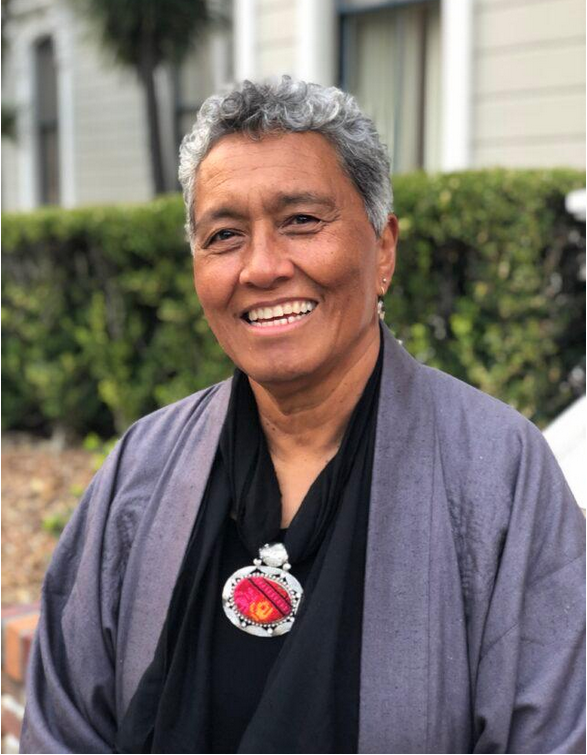
Margo Okazawa-Rey
Margo Okazawa-Rey, Professor Emerita San Francisco State University, is an activist-educator working on issues of militarism for over 30 years. She has long-standing activist commitments in South Korea and Palestine, with Du Re Bang and Women’s Centre for Legal Aid and Counseling, respectively. She is a founding member of the International Women’s Network against Militarism and Women for Genuine Security, its US group. She also hosts feminist radio program Women’s Magazine, broadcast on KPFA Berkeley California station of the Pacifica Radio network, and is known as DJ MOR Love and Joy, transnational feminist virtual dance party DJ.
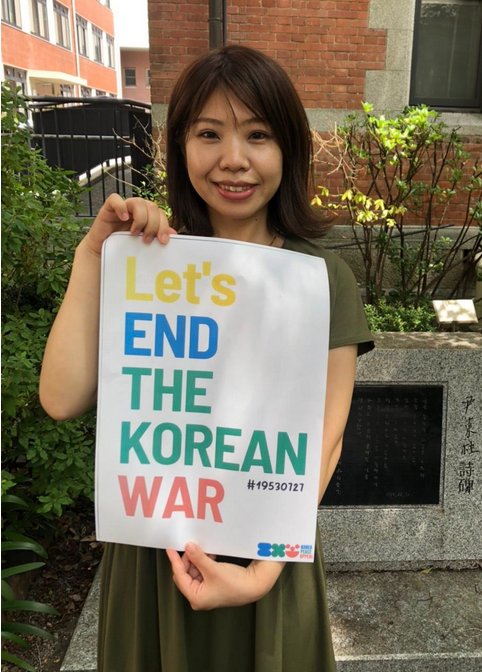
Yuuka Kageyama
Yuuka Kageyama is an international member of the Women’s International League for Peace and Freedom (WILPF) and WILPF Kyoto, based in Japan. Her activism and research focus on demilitarizing and decolonizing security from a feminist perspective, with particular attention to the links between militarism and gendered oppression. She has been active in transnational networks, including the International Women’s Network Against Militarism (IWNAM), the Global Partnership for the Prevention of Armed Conflict (GPPAC) Northeast Asia, and WILPF. Her current work focuses on the ongoing practice of building and sustaining intersectional feminist movements in the Asia-Pacific that challenge militarized notions of security.
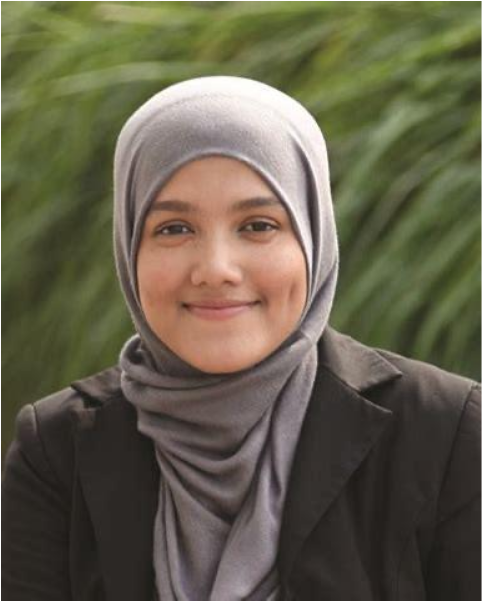
Yasmin Ullah
Yasmin Ullah is a Rohingya feminist, author, poet, and a social justice activist. She was born in the Northern Arakan state of Burma/Myanmar. Her family fled to Thailand in 1995 when she was a child and she remained a refugee until moving to Canada in 2011. She is the founder and the executive director of the Rohingya Maìyafuìnor Collaborative Network which is a women-led, Rohingya-led and refugee-led organization working on Rohingya human rights issues, SGBV, education and translocal solidarity with a focus on women, peace and security as well as intersectionality framework. She previously served as the President of the Rohingya Human Rights Network (2018-2020). She serves as a board member of the ALTSEAN-Burma, and US Campaign for Burma, and as a member of the steering committee in Bridges MM-Myanmar Youth Dialogue project. Among the projects she has worked on are, Time to Act: Rohingya Voices exhibition with the Canadian Museum for Human Rights and the Genocide Learning Tool: Us vs. Them with the Montréal Holocaust Museum. Her poetry is published in the anthology I Am A Rohingya along with other Rohingya poets from the refugee camps and beyond. Her creative writing encompasses other genres of writing including the recently published children’s book called Hafsa and the Magical Ring. Yasmin has been a UN Minority Fellow since 2023. In 2021, she was named on the FemiList100, the Gender Security Project list of 100 women from the Global South, working in foreign policy, peacebuilding, law, activism, development.
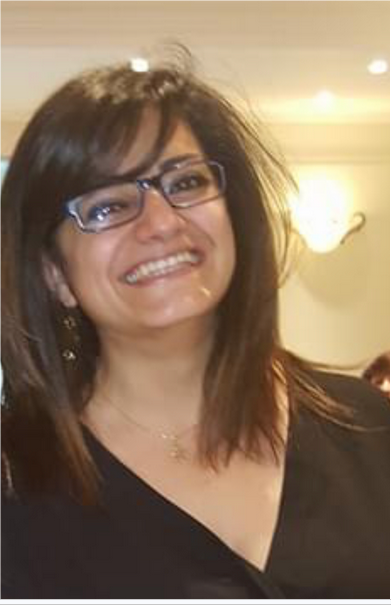
Rola Al Masri
Rola Al Masri has spent the past two decades working at the intersection of feminist thought and practice, beginning in Lebanon and the MENA region, and gradually extending into transnational spaces. Her work has taken many forms—research, convening, writing, and strategizing—always centered on gender justice and the long struggle for liberation. Much of her recent work has lived in the space between the local and the global, listening to insights and realities of feminist movements, and finding ways to carry that knowledge and feminist narratives into wider conversations. She has written and co-authored research and policy briefs on women, peace and security, and the gendered impact of conflict on women and marginalized communities. Trained in psychology, she has most recently been the Director of Programs at the Women’s International League for Peace and Freedom (WILPF).
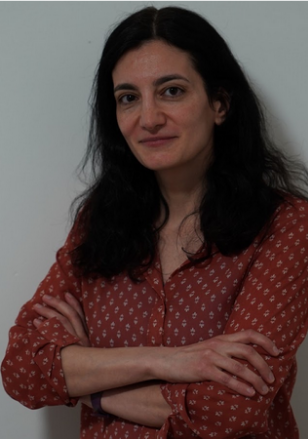
Meral Çiçek
Meral Çiçek was born in 1983 in a Kurdish guest-worker family in Germany and studied political science, sociology and history at the Goethe-University in Frankfurt. In 2014 she co-founded the Kurdish Women’s Relations Office REPAK in Southern Kurdistan. She is editorial board member of the Jineoloji journal. Currently she is activist of the Kurdish Women’s Movement in Europe and freelance journalist.