


In January 2019, a group of Albanian businessmen and intermediaries, as revealed by BIRN Albania’s investigative reports, gathered on the idyllic Caribbean island of Aruba. The setting could hardly have been more picturesque: turquoise waters, luxury resorts, and the promise of discretion far from the scrutiny of home. Leading the cast was Artur Shehu, a native of the coastal town of Vlora and a long-time resident of Florida in the United States. He seems to master the art of being present wherever the most interesting conversations are taking place, and Aruba was no exception. The meeting’s agenda spanned three worlds that are often assumed to remain separate: the logistics of cocaine trafficking in Latin America, lucrative real-estate transactions in Tirana, and land allocation for ambitious tourism developments along the Albanian Riviera. This is not a true crime movie script, even if it ought to be one.
International and domestic anti-organized-crime investigators have identified Shehu as a recurring presence at similar gatherings elsewhere in the world, where the movement of large cocaine shipments from Latin America into Europe have allegedly been coordinated through major ports in Belgium, the Netherlands, and Spain. These operations—brought to light by Albania’s Special Structure Against Corruption and Organized Crime (SPAK)—seem to have generated vast profits that are believed to have flowed to Albania through informal money-transfer channels, including physical cash movements and hawala-type networks, before being integrated into the legitimate economy.
A hawala network is an informal method of transferring money outside of traditional banking channels. It relies on a system of trusted intermediaries, known as hawaladars, who facilitate transactions based on personal relationships and mutual trust. For example, if an individual residing outside Austria gives €20,000 to a hawaladar in Vienna, the latter contacts a counterpart in Albania and instructs them to pay the equivalent amount to the intended recipient. No money physically crosses the border, but the two intermediaries settle their accounts at a later date through cash transfers, property transactions, or other financial arrangements.
Prosecutors claim that such methods were used to facilitate the sale and transfer of Albanian land whose ownership had been fraudulently established. According to the investigation, forged ownership documents were used to create vast property holdings, which were then fragmented and shuffled through a web of sales and transfers designed to conceal their origins. Once laundered through layers of transactions, the land entered Albania’s booming construction sector, where developers turned disputed assets and suspected criminal proceeds into luxury resorts, residential complexes, and high-value real-estate projects, effectively masking illicit funds behind the façade of legitimate development. The investigations show that the so-called “Aruba Summit” alone set in motion dozens of projects in Tirana and along the coast of Albania.
It is important to note that Albania’s construction sector has long been regarded as one of the country’s most corruption-prone industries, despite Prime Minister Edi Rama’s efforts to project a different image. The products of this system, far from being hidden, dominate Tirana’s skyline and stretch across the country’s Riviera. They are promoted by Rama’s government as flagship projects of modernization and development, where local and international power brokers, oligarchs, and what are presented as “star” architects converge in ventures that blur the boundaries between politics and the shadow economy.
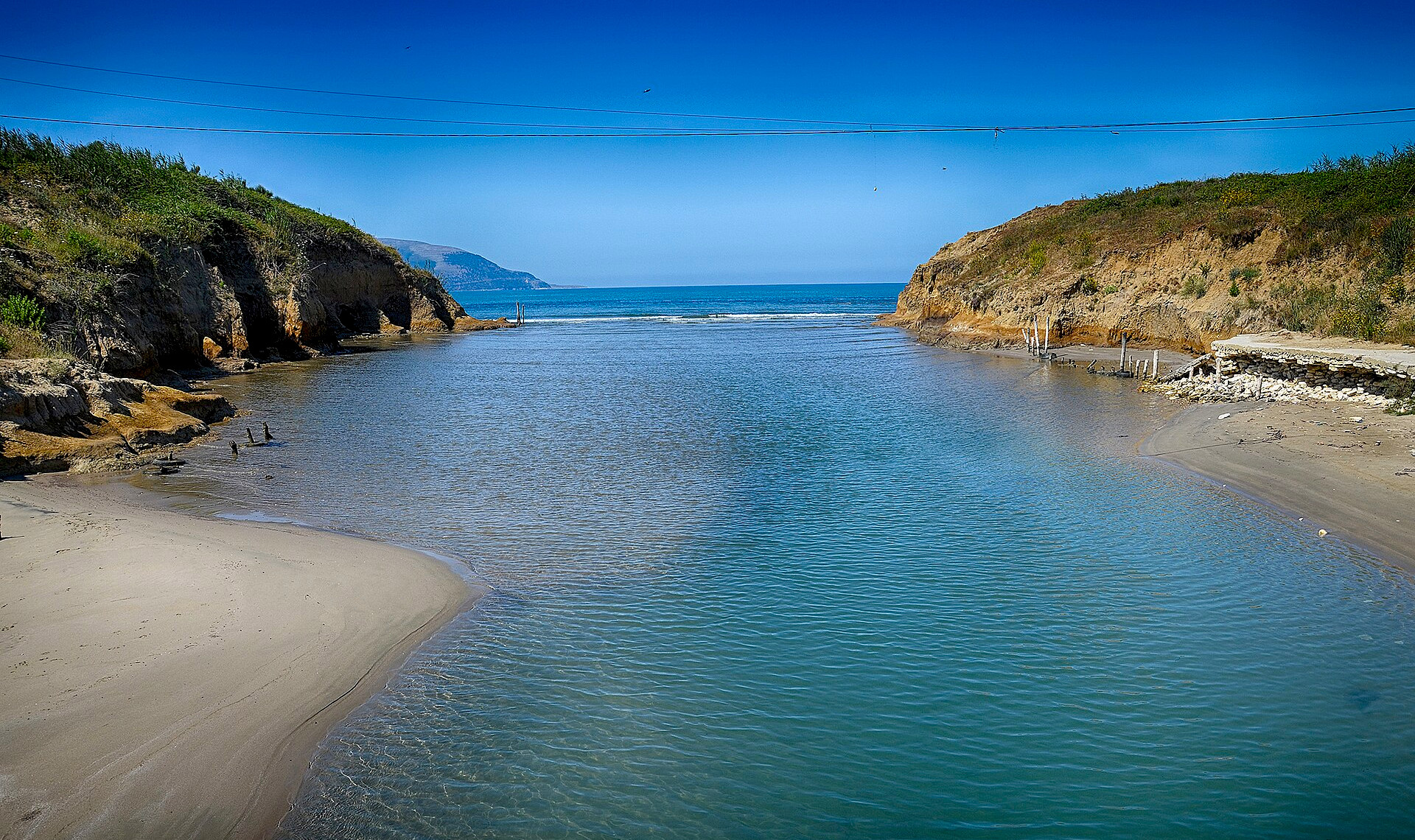
The Zvërnec South Adriatic Development, the luxury real-estate project backed by Donald Trump’s son-in-law Jared Kushner and the president’s daughter Ivanka Trump that has sparked the so-called “Flamingo Revolution”, represents the point at which these allegations intersect with one of the most politically significant development projects in contemporary Albania. The land where the project is to be built, and for which the Albanian government formally granted a construction permit in January 2025, has been the subject of legal disputes between local residents and Artur Shehu for nearly two decades.
Court documents show that the ownership of the land designated for the luxury resort construction in the protected area of Zvërnec and the Vjosa-Narta Lagoon was transferred from Artur Shehu and his associates to a company called Albania Land Development through a series of transactions valued at approximately €211 million. The company was later acquired by the Syrian-Qatari businessmen Ramez and Mohamad Al Khayyat, introduced now as main investors in the construction project, alongside Jared Kushner.
The transactions attracted the attention of prosecutors due to the dramatic 22-fold increase in land values between November 2025 and May 2026 and the involvement of two individuals: Artur Shehu, who had previously been identified by authorities as having links to organized crime, and businessman Redi Struga, whose name appeared on both sides of the transactions—as a major buyer through Albania Land Development and a major seller through South Adriatic Development, an intermediary company involved in the land acquisition and transfer process. In several cases, companies managed by Struga have allegedly bought and sold land between themselves to substantially inflate its value. Importantly, the land that became the basis for the resort project is the same land whose ownership history and transfer chain are now under criminal investigation.
The development permits for the resort were granted to a separate company, which bears the same name as the project—Zvërnec South Adriatic Development. This entity is distinct from South Adriatic Development, the intermediary company involved in the land transactions under investigation. Initially registered through an offshore trust structure in the Netherlands with undisclosed ownership, Zvërnec South Adriatic Development was transferred in May 2026 to Sazan Development Holding LLC, a Doha-based entity owned by the Al Khayyat brothers and additional corporate shareholders registered in Luxembourg and Delaware.
While Zvërnec South Adriatic Development serves as the project’s development vehicle, the investment itself is being advanced by Atlantic Incubation Partners, a company linked to Kushner’s Affinity Partners fund. As a result, the project brings together land currently subject to ongoing criminal inquiry, a complex international ownership structure, and high-profile foreign investment backed by actors with significant political connections. Against this backdrop, the Albanian government has granted Atlantic Incubation Partners “Strategic Investor Status,” enabling it to benefit from expedited approval procedures and other preferential provisions under Albania’s strategic investment framework.
The Strategic Investments Law (Law No. 55/2015), through which such projects are advanced, has created a parallel governance framework that treats selected private investments as matters of public interest. In doing so, it grants investors expedited access to permits and administrative procedures, as well as state support in the form of infrastructure, access to public land, and land consolidation measures. As such, the law concentrates significant discretionary power within the executive branch, as the Strategic Investments Committee responsible for granting strategic status is chaired by the Prime Minister himself.
Furthermore, the law’s most controversial provision under Article 28 allows, under the “special procedure” regime, the expropriation of private property in the name of public interest when an investor is unable to reach an agreement with landowners.
The Flamingo protesters, as the movement’s participants have come to be known, are currently demanding the repeal of the legislation underpinning such preferential treatment, alongside the cancellation of the project itself and the resignation of Prime Minister Rama.
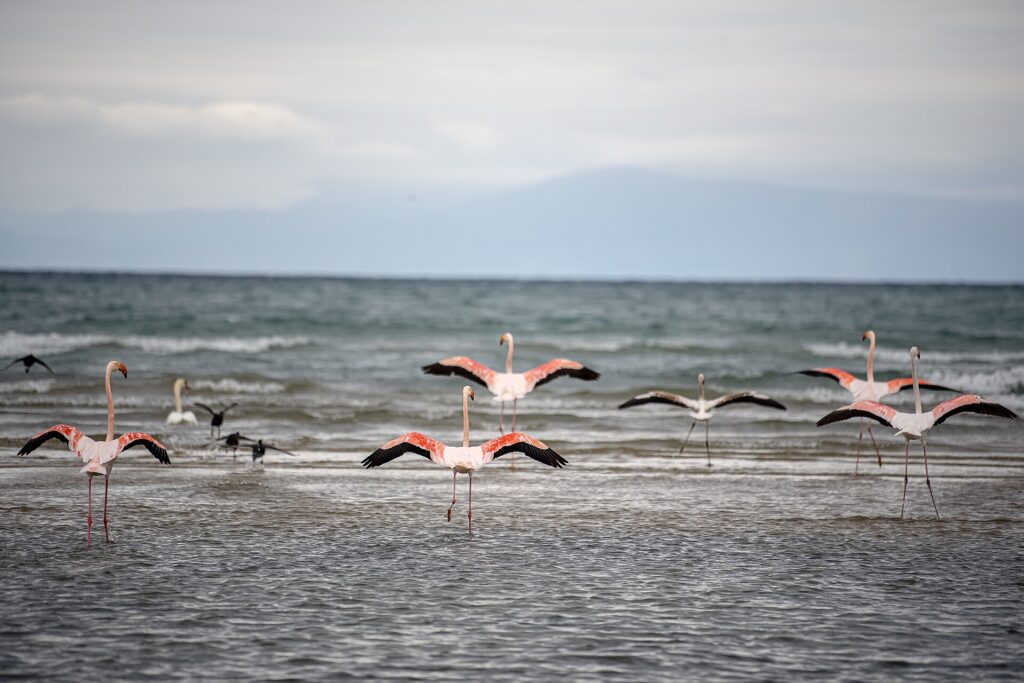
While suspicions about the entanglement of organized crime in state institutions and major development projects, as well as the resulting consolidation of state capture, have long existed, these investigations have provided further tangible evidence to support them, fueling a broader wave of public discontent that is now entering its fourth week of protests. The Flamingo Revolution in Albania should therefore not be understood solely as a struggle to protect the environment, but also as a broader pushback against an oligarchic system sustained by ties between economic elites, organized crime, and political corruption.
The Zvërnec South Adriatic Development project is currently the subject of a separate SPAK investigation focusing on two key issues: longstanding disputes over land ownership and the controversial 2024 amendment to the Law on Protected Areas, which facilitated development in environmentally protected zones.
But the movement has expanded beyond Zvërnec and the Vjosa-Narta Lagoon. In fact, it has become the largest protest movement in Albania since the fall of the communist dictatorship in 1991. Across the country, residents in areas affected by similar controversial development projects have begun dismantling fences erected around construction sites, often encountering little resistance from the police. As such, Zvërnec does not represent an isolated case, but rather part of a broader pattern of land expropriation that benefits politically connected economic elites at the expense of the public interest.
For instance, in Rrjoll, a village in northwestern Albania on the Adriatic coast, similar confrontations have unfolded between local residents, private developers, and the police, after the government granted a private company strategic investor status for a development project spanning 147 hectares in the Rana e Hedhun and Velipoja coastal zones. Given that this site is classified as a protected area, the decision has triggered controversy over the use of the strategic investment legislation in environmentally sensitive locations. For these reasons, the protests have also spread in almost all major cities in Albania and in the diaspora.
Meanwhile, increasingly unable to control the narrative, Rama has employed a range of tactics to discredit and divide the movement. He has called on its leaders to engage in dialogue—a request that was rejected, as the movement remains leaderless. He has also amplified claims that the protests are being orchestrated from abroad, portraying Albania as the target of a “hybrid war” waged by external actors, some explicitly identified and others left unnamed. More recently, he has attempted to push forward a narrative that the movement is fascist, comparing slogans such as “the state belongs to Albanians” to the rhetoric of German Nazism and Italian Fascism.
Yet the protesters are not advocating for an ethnically exclusive state. Albania belongs to everyone who wishes to visit it or be part of it, and connect with its people. What protesters contest is a political and economic system captured by a network of corrupted political elites, oligarchic interests, and organized crime.
In Zvërnec, Rrjoll, Theth, and other parts of the country, people are not mobilizing against foreigners or other ethnic groups; they are mobilizing to reclaim democratic accountability and public control over the decisions that shape the country’s future.

Gresa Hasa
Gresa Hasa is an expert on Albania and the Western Balkans, with a particular focus on the rule of law, state capture, democratic backsliding, and electoral politics. She is a PhD candidate at the Faculty of Law and the Center for Southeast European Studies at the University of Graz, Austria, as well as a 2026 BiEPAG Fellow.