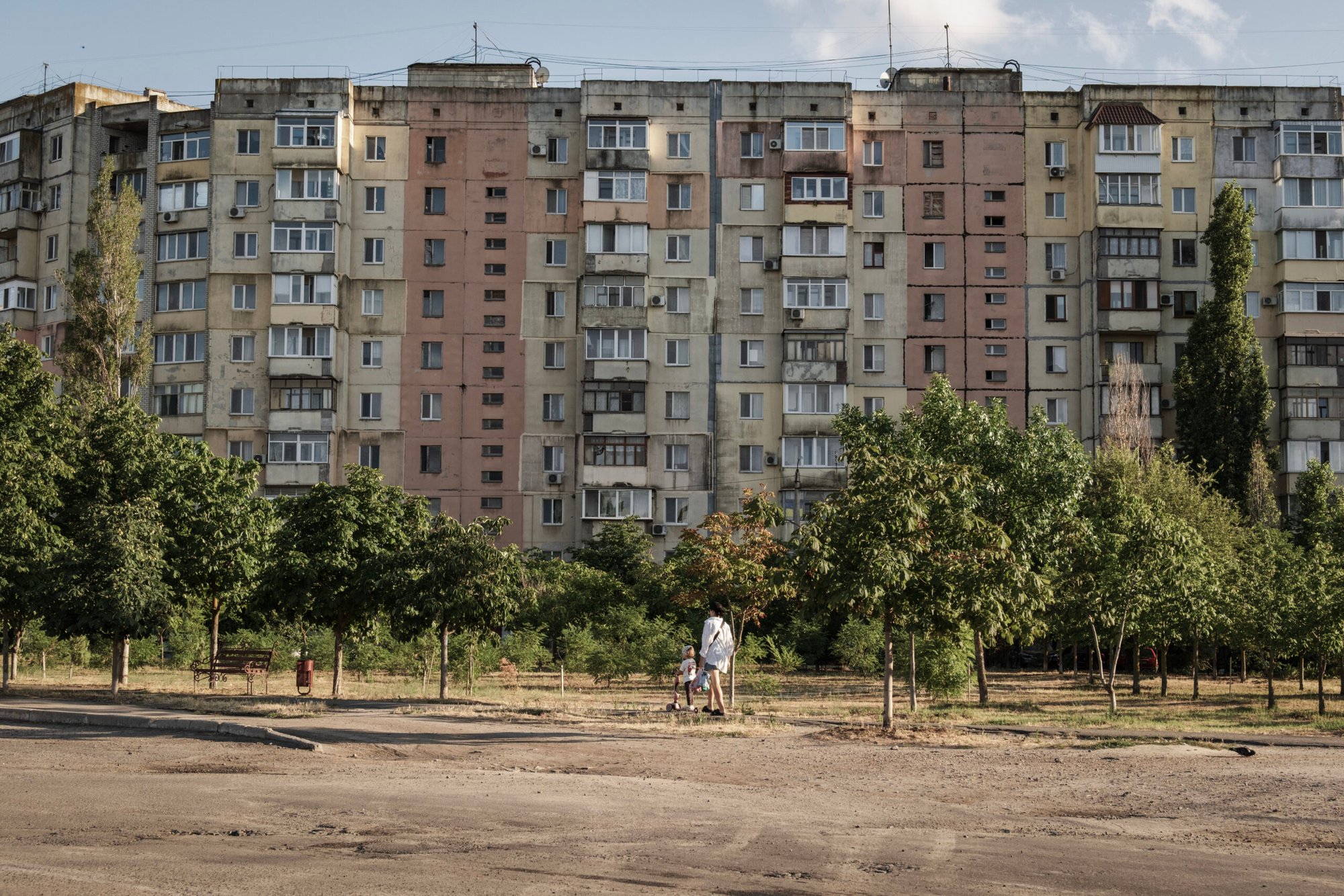



In several Southern and Eastern European countries—including Croatia, Slovakia, Italy, and Portugal—up to 80% of young adults are unable to leave their childhood homes due to skyrocketing rents and house prices. In Germany, a national deficit of up to 1.4 million homes is met with a sluggish construction effort of barely 200,000 new apartments a year. Meanwhile in Greece, public housing is so scarce that its share of the national housing stock rounds down to 0%.
These figures are not coincidences; they are symptoms of one of the most pervasive European crises: the collapse of housing affordability and spiraling living costs.
When Turning Point was founded at the end of 2023, housing was among the very first themes we focused on, leading to our first dedicated issue in 2024. Since then, we have returned to the topic every August. Its permanence in our coverage speaks to the deep roots of the crisis: entire wars have been fought in the intervening years, yet Europe remains as starved for affordable housing today as it was then.
For much of this millennium, a convenient narrative has blamed Europe’s declining living standards on external shocks: first the 2008 subprime mortgage crisis, then the COVID-19 pandemic, followed by wars in Ukraine, Palestine, Iran and elsewhere. Yet when applied to the housing market, this crisis rhetoric loses its explanatory power: the EU and its member states pledged to tackle the issue time and again, yet the crisis has only grown deeper.
Consider the numbers: in Hungary, there are over 500,000 empty apartments, yet house prices have nearly tripled since 2010, pricing an entire generation out of homeownership. In Estonia, rents surged over 200% across the same period, pushing families into the hinterlands. Across Western European metropoles—from Lisbon and Milan to London—rents now eat over two thirds of an average worker’s paycheck. The same applies to Kyiv, both before and after the Russian invasion.
The underlying trend remains the same: a structural, multi-decade transfer of wealth from the tenant class to landlords and real estate conglomerates. This is not a sudden, external shock—it is a steady, deliberate grind driven by the commodification of our basic needs.
In the end, the housing question splits into two mutually exclusive visions: one that sees shelter as a public utility and social right, and another that treats it as a financial asset to be traded, hoarded, and speculated upon. Though housing policies vary across countries, all fall on the same side of this divide and produce the exact same outcome: wealth concentration to the top, growing bills for the bottom, and gentrification ripping entire communities apart. Even if private ownership and platforms like Airbnb promised to “democratize” the rental business, they ultimately only accelerated tourism-driven displacement, and handed entire districts over to corporate portfolios.
This battle line was drawn most clearly in Berlin, where residents voted in 2021 to expropriate holdings from the city’s largest corporate landlords and return them to public control. Yet despite a clear democratic mandate, the initiative was paralyzed by years of bureaucratic stalling—culminating in federal legislation last month that prohibited state-level expropriations entirely. Similar arm-wrestling is unfolding in Barcelona that tries to limit short-term rentals. While both cities are expected to introduce measures to alleviate the housing squeeze, no piecemeal policy can solve the issue without a deeper paradigm shift.
At Turning Point, we view housing as fundamental public infrastructure and a true measure of a society’s well-being. It is deeply symptomatic of our era that social progress is framed as a race to send a few billionaires to space, while millions struggle to keep a roof over their heads. A healthy society does not take pride in the fortunes accumulated by a select few, but in its capacity to provide for all its members. When it comes to housing, the European outlook is undeniably disgraceful, but not hopeless.
Across the continent, tenant unions, neighborhood committees, and housing collectives have multiplied ever since the 2008 financial crisis, born of a speculative construction boom. The initiatives have reclaimed empty apartments and office spaces to fill them with life again, often becoming kingmakers in municipal politics. In heavily impacted metropoles like Barcelona, Berlin, and Brussels, parties rallying around cost-of-living questions have upended decades-old municipal power balances and driven unprecedented surges in popular support.
Yet local victories, vital as they are, can only act as a defensive perimeter against a continent-wide trend. A municipal government can freeze rents, but it cannot dismantle the cross-border financial structures that continue to gentrify, displace, and disrupt. The battle for affordable shelter cannot remain confined to city halls; it demands a structural overhaul at both national and European levels.
For decades, the European Union let markets determine where capital flowed and how. When the systemic cracks became impossible to ignore, Brussels responded with rhetoric rather than reform—culminating in symbolic moves like appointing the EU’s first-ever dedicated Commissioner for Housing. But appointing ministers or drafting “affordable housing plans” means little if European fiscal rules continue protecting corporate landowners and real estate markets at the expense of genuine democratic governance.
This disconnect between institutional inertia and reality on the ground is why our coverage in this issue takes us directly to the frontlines of housing question. In Belgrade, an unprecedented influx of Russian capital post-2022 reshaped the real estate market overnight, pushing central rents far beyond local wages and illustrating how rapidly regional instability can convert a fragile housing sector into a sandbox for financial speculation. In Athens, we report from inside the squatted Prosfygika complex, the self-governing community of over 400 residents that has galvanized social movements, housing advocates, and lawmakers across Europe this summer. People from across borders have traveled to Athens to support the community’s struggle against state-led eviction and commercial redevelopment, standing as a living example of an internationalist response to the international crisis that manifests itself now in Athens’ Alexandras Avenue.
Together, these dispatches illustrate a single, urgent truth: whether through geopolitical spillovers or state-led urban renewal, the commodity housing model is pushing working people to the brink. It is now time to decide whether European cities exist to serve the people who build their lives within them, or to act as asset portfolios for institutional investors. Or, as the Community of Prosfygika put it, it is time for the housing question to become “a proposal that will bring society and movements back onto the streets for the fall of the regime, while simultaneously building a new social imaginary and a new material world.”