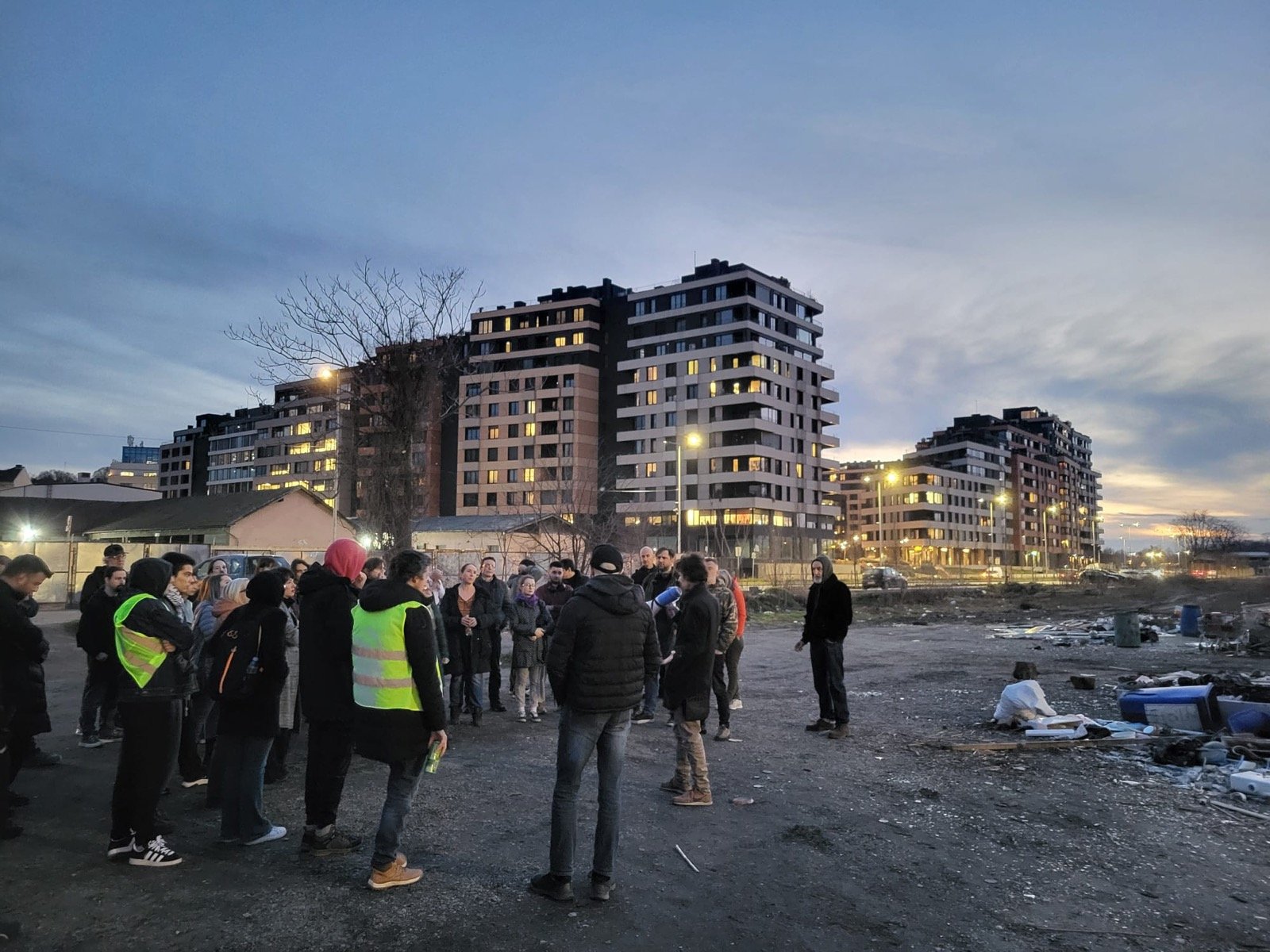



Belgrade’s housing market has lurched from one shock to another in recent years. Property prices began increasing during the Covid-19 pandemic, then soared in 2022 amid an influx of Russian migrants due to the war in Ukraine. Now, analysts are speculating about whether renewed instability in the Middle East could trigger another shock. But focusing on each new external crisis obscures a deeper problem: housing in Belgrade was becoming increasingly unaffordable even before the latest shock, and new construction is not resolving the problem.
According to British financial portal Tradingpedia’s 2026 comparison of European capitals, renting a furnished 45-square-metre apartment in Belgrade, including utilities and internet, consumes 61.5% of the average local salary. Belgrade was subsequently ranked the fifth most expensive capital in Europe.
The skyline points to an even deeper contradiction. From almost any of Belgrade’s many viewpoints, it is difficult to scan the horizon without construction cranes obstructing the view. In the second quarter of 2026, the real value of construction work in the capital jumped 51% year-on-year. And there is still more being planned.
The contradiction is striking. Belgrade is building at extraordinary speed, yet much of that construction does not correspond to the housing needs or purchasing power of its ordinary residents. Instead, economists and housing activists argue, residential properties function not only as places to live but as a vehicle for storing and accumulating capital.
The construction of a luxury development “Belgrade Waterfront” is one particularly illustrative example. The project became notorious in 2016, when masked men armed with baseball bats oversaw the demolition of buildings in Savamala despite mass opposition. Now, properties in the development cost upwards of 5,000 euros per square meter, while the median salary in Serbia sits at about 795 euros per month.
Against this backdrop, the Serbian government recently approved an expansion that nearly doubled the size of the luxury project, despite more than 10,000 submitted public objections. Around 70% of construction planned on the right bank of the Sava River is residential, with the largest share consisting of luxury apartments averaging roughly 100 square meters—far larger than the smaller, cheaper units more accessible to first-time buyers. Furthermore, the expanded development is set to include a “world-class” yacht club and an outdoor pool.
In a petition against the expansion by the grassroots collective “Belgrade Stays,” activists wrote “Do not forget that this is not only about construction, but also that the ownership of our land will be transferred to a ‘foreign investor’ who is a cover for the domestic cartel.” UAE-based Eagle Hills holds 68% of the project company, while the Serbian state owns 32%.
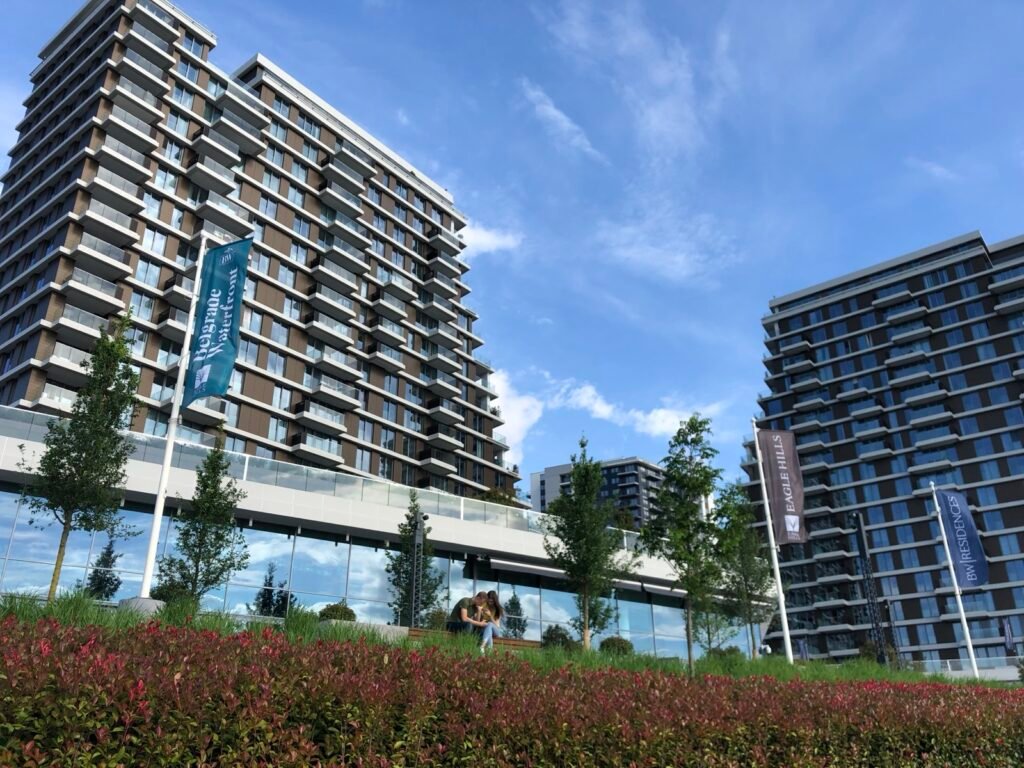
From its inception, Belgrade Waterfront has operated under exceptional planning and legal arrangements outside the ordinary regulatory framework, drawing persistent criticism over transparency and democratic participation. In April 2015, Serbia adopted a lex specialis under an urgent procedure to bypass legislation governing expropriation, building permits, taxation and land use. Similar legal mechanisms are used in controversial development projects throughout the region, including in Albania where the government is attempting to use the Law on Strategic Investments to expropriate residents from the Vlorë-Narta region.
Belgrade Waterfront is therefore “not simply a collection of expensive apartments purchased by wealthy people,” says economist Dmitry Pozhidaev. Rather, he argues, it represents a model in which public land and infrastructure, backdoor government dealings and arrangements, and private capital are combined to create both highly profitable investments and extremely inaccessible housing.
According to Serbia’s 2022 census, 118,735 dwellings in Belgrade — almost 14% of the city’s housing stock — were classified as temporarily unoccupied or abandoned. The same census identified 4,116 people in Belgrade as homeless, although human rights organization A11 Initiative argues that the methodology significantly undercounts homelessness.
“Public investment, construction, rising land values and high-end property development can become mutually reinforcing mechanisms of capital accumulation,” states Pozhidaev. But the other side of balance sheets and profit projections lies a darker reality that Belgrade residents are facing: displacement and forced evictions.
In February 2026, the City of Belgrade forcibly evicted 12 Roma residents of the Dorćol neighborhood, who resided in an informal settlement in an area set to be developed into an urban park forming part of the Belgrade Waterfront expansion. The families, which included children and babies, were given two hours to collect their belongings and vacate the area that they have lived in for six years. The “alternative housing” they were offered consisted of two empty metal containers without heating in the middle of winter, and in one of them the electrical system did not work.
Ivan Zlatić, an activist representing the grassroots housing organization Krov nad glavom (“Roof Over Your Head”), says the eviction was conducted “as a surprise operation, without notice and outside public scrutiny.” According to the 2016 Law on Housing and Building Maintenance, the government must provide adequate accommodation for those being displaced for projects deemed in the public interest.
“The state regularly ignores these provisions whenever no one is watching,” he remarks.
Furthermore, in 2011, Serbia transferred significant enforcement powers from courts to private enforcement officers, allowing homes to be seized and sold over outstanding debts, including something as minor as an unpaid utility bill. It is thus not only new construction threatening the living conditions of working people in Belgrade.
“Private enforcement officers are therefore a structure introduced to facilitate monopolization of the real-estate market—in other words, to reduce the predominance of owner-occupied housing established in the early 1990s and increase the market share of real-estate tycoons, from whom working people then rent their homes,” Zlatić comments.
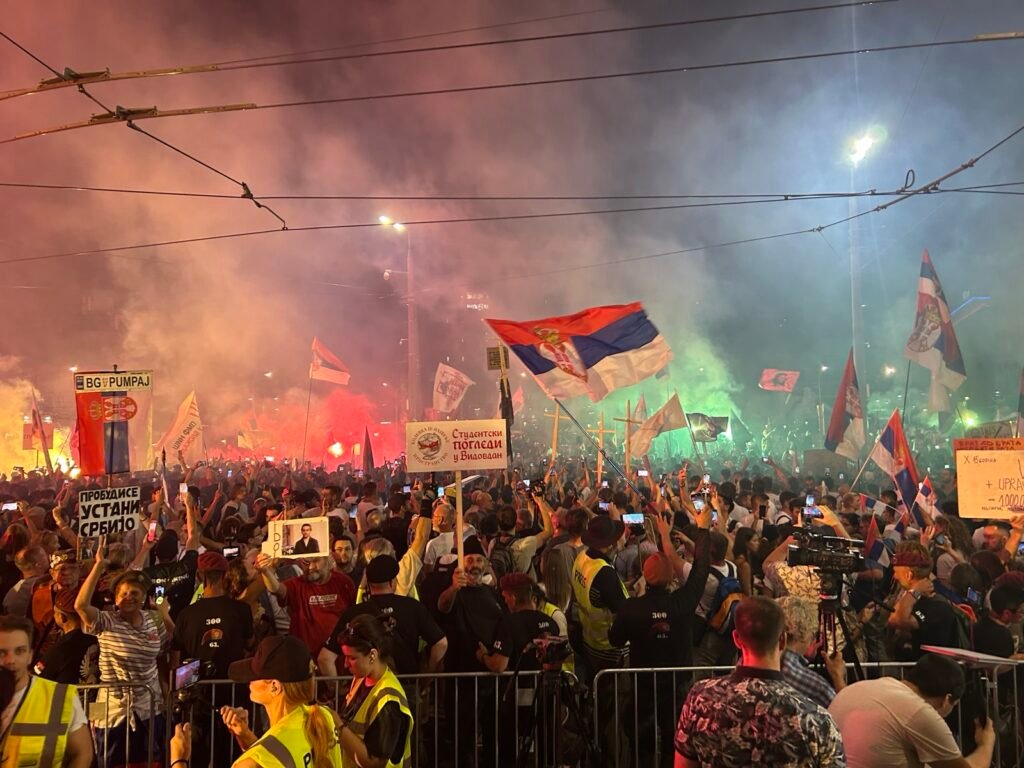
Krov nad glavom has been fighting against forced evictions and what they call “debt bondage” for years. Besides protesting the private enforcement officers when they attempt to forcibly evict working people, in 2021 they also submitted a request to the Constitutional Court to assess the constitutionality of the Law on Enforcement and Security, which regulates the debt enforcement officers.
At the time, there was not enough public pressure surrounding these issues. The political context changed only after the mass uprising that followed the November 2024 collapse of the Novi Sad railway station canopy. Amid the protests, President Aleksandar Vučić announced changes to the enforcement law that he said would protect people from losing their only home.
However, protection applies only if five conditions are simultaneously met, such as that the home is no larger than 60 square metees and that the debtor has been registered there for at least five years. As such, Zlatić says that almost a year after the amended law came into effect, “neither we nor other organizations dealing with housing issues are aware of a single case that meets the conditions required to apply for this protection.”
From luxury towers to informal settlements, Belgrade’s housing crisis reveals a growing contradiction between the commodification of housing and access to it. More construction has increased the housing stock, but it has not eliminated homelessness or made housing affordable. At the same time, households that already have a home can face displacement through redevelopment or the forced sale of property over debt, pushing them into a rental market they cannot afford.
The question hanging over Belgrade’s crane-filled skyline is therefore not how much housing the city can build, but which political and economic forces decide who gets to stay.

Ana Milosavljević
Ana Milosavljević is a Belgrade-based freelance journalist reporting on social movements and economic issues in the Balkans, with the work published in outlets including The Guardian and regional media.