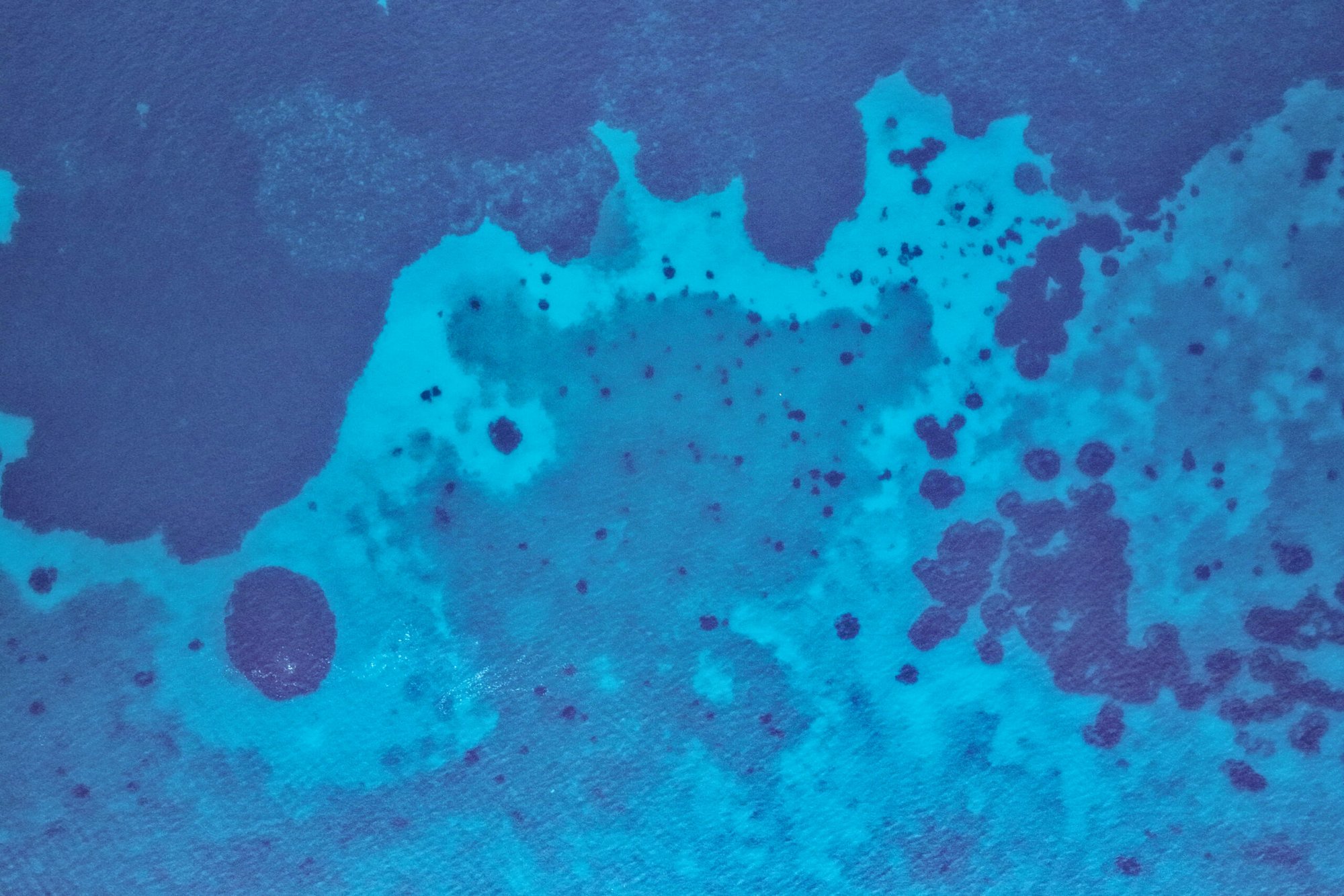



Walking on the berth at Kavala, looking out seawards, you behold one of the most complex geopolitical landscapes of the 21st century.
Just across the sea is the island of Thassos, so famous in antiquity for its fertility and mineral-rich earth that Athens subordinated it. The heavily militarized island of Lemnos lies a few sea miles to its southeast, strategically at the mouth of the Dardanelles Straits. From its Mudros port, the British imperial fleet enforced embargoes against the Ottomans during the World War I and later against the newly Soviet Russia after the 1917 Revolution.
Lemnos is within spitting distance from one of the world’s most sensitive maritime chokepoints: the Dardanelles. The long sliver of water snakes past Byzantine-era castles to connect the Aegean to the Black Sea. It separates Europe from Asia and West from East, and connects two of Eurasia’s three inner seas. Twelve Russo-Turkish wars were fought over its control, including wars involving Britain against Russia and the Ottomans in Crimea and Gallipoli.
While standing at Kavala’s quayside, a glance behind reveals an intricate Ottoman palace. The Imaret was endowed by Kavala native Mehmed Ali, a rough Albanian soldier who founded a dynasty in Egypt after travelling there with the Ottoman army to depose its corrupt Mameluke dynasty. He then wrested autonomy for Egypt from the Ottomans. The palace was initially built as a charity for Kavala’s poor and belongs to Egypt’s Islamic charitable endowments authority. The Greek government batted aside competing Saudi and Turkish restoration proposals to turn it into one of the world’s most exclusive hotels, in a reflection of the ongoing geopolitical arm-wrestle between Ankara, Cairo and Riyadh over the wider region.
The Mediterranean: From distanced divider to active battlefield
Staring down the length of the Aegean from Kavala, your gaze passes the indestructible “terrestrial airplane carriers” of Crete and Cyprus, before crossing the Levant Basin, across still-smoking Gaza and Lebanon, on its way to the African continent’s Egyptian shore.
This 350,000-square-kilometer parcel of the Mediterranean has lain geopolitically dormant for decades, but its component seas are reemerging in a tightening lattice of confrontations. Since 2022, an increasing saturation of warships and satellites scan its waters, as the proxy wars of global superpowers flare brighter in Ukraine, Gaza, Lebanon, and Iran. The military bases of Sigonella, Souda, and Akrotiri are pinpricks of empire from which American and British aircraft and destroyers embark on bombing and surveillance runs against militant groups in central and southern Eurasia opposed to the US-dominated global trading system.
Created only in the 19th century, Greece is a small state even younger than the USA. As the sun sets over its patron’s influence, it finds itself caught between two simmering conflicts in Ukraine and the Eastern Mediterranean seaboard. Athens’ right-wing political elites have been staunch allies of Washington since World War II, when the latter supported them in the 1944-49 civil war to regain power against the Communist opposition that had remained in Greece to fight the Nazi occupation. The leftist guerrillas who camped out in northwestern Greece’s Grammos mountain ranges were some of the first to be defeated by a new American weapon: napalm.
The reinstated elites began repaying their indebtedness by sending soldiers to Washington’s war in Korea, where they fought against China. Today, Athens is still repaying. The American air force and navy use several Greek military bases as logistics hubs, and Greece’s arms-procurement expenditure is one of the highest per capita in the world. In 2015, Athens became the second country in the world to sign a military alliance with Israel. The partnership has benefited Israel—now stretched across several fronts—by providing it with a training ground in peacetime and strategic depth in wartime.
With military tensions soaring, the Eastern Mediterranean is increasingly criss-crossed by military aircraft and vessels, and at risk of the same environmental damage witnessed on its neighboring seas. Drilling initiatives for energy and rare earths will burden the regional environment, even in the absence of ecologically disastrous accidents that remain a constant threat on the horizon.
“Right now in the Mediterranean, Libyan authorities are trying to control a damaged drifting Russian LNG tanker that poses severe ecological threats after being attacked at sea,” director of the Conflict and Environment Observatory Doug Reid told Turning Point.
Skyrocketing mineral prices and advances in autonomous underwater drills have raised the prospect of underwater mining, threatening to expose vast areas of the Mediterranean depths to destruction. The coastal states each seek a share of the pie.
“Geopolitical risk is the greatest challenge in the Mediterranean,” said Ioannis Giovos, a conservation officer of iSea, a Thessaloniki-based NGO that seeks to remove litter and microplastics from the sea. “The seas off Palestine, occupied Cyprus, and the Spanish-occupied parts of Morocco form some of several blind spots where countries block each other over coordination due to ulterior politics.”
“The main conflict-linked pollution threats to the Black and Red seas come for example from attacks on offshore and coastal oil facilities around the Black Sea, as well as attacks on, and accidents caused by, Russia’s Shadow Fleet oil tankers,” said Reid. “In recent years we have also seen serious pollution incidents linked to Houthi attacks on Red Sea shipping, pollution threats from Israeli attacks on Yemeni port infrastructure.”
Shifting boundaries
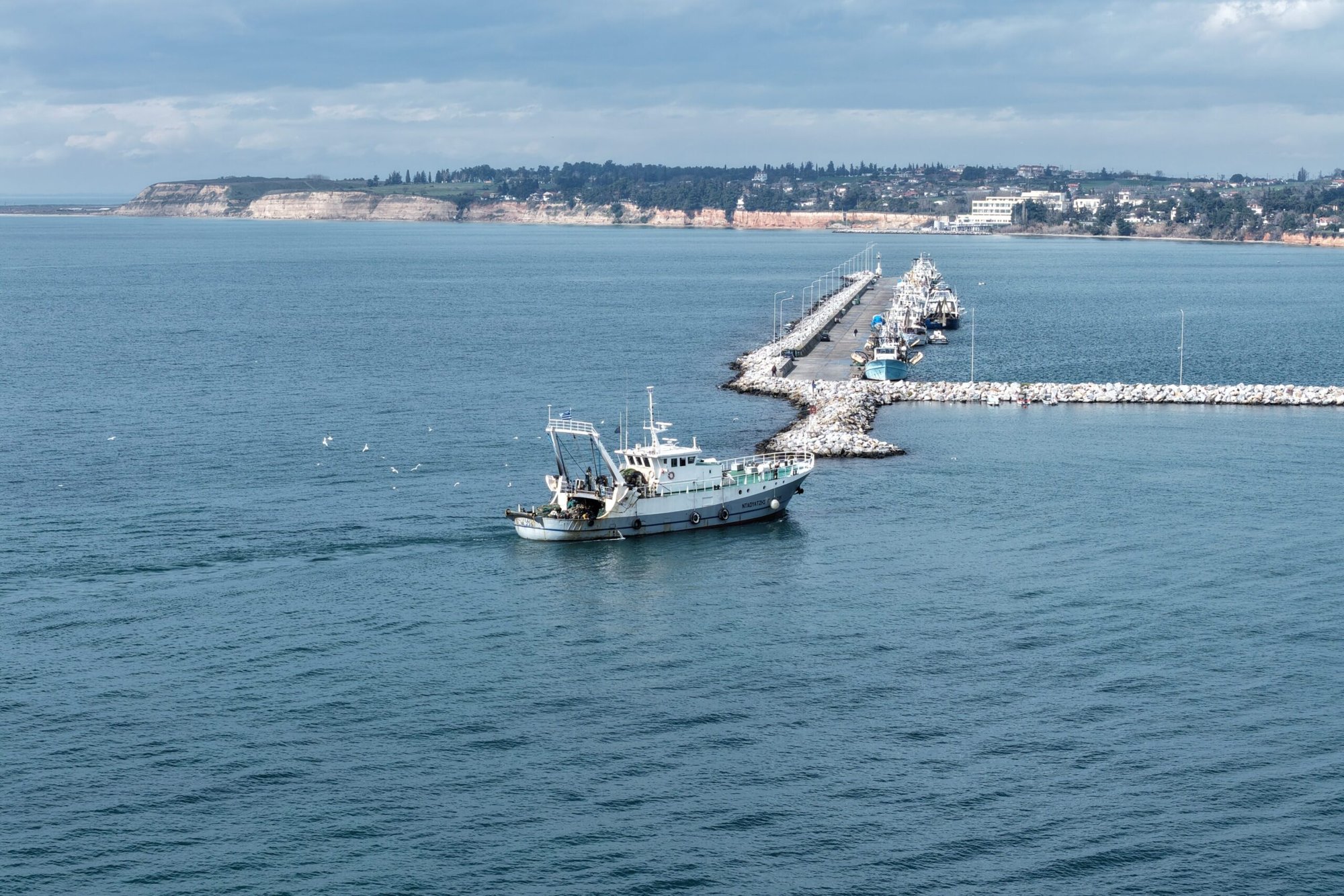
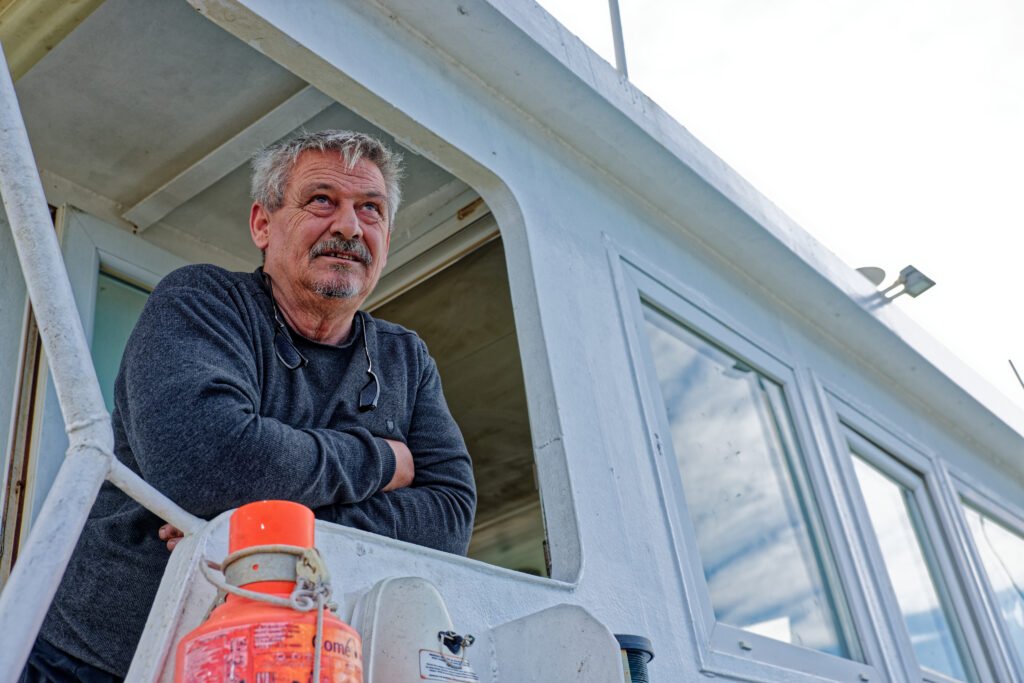
Kostas Daoultzis, one of the sea’s older traversers, feels the geopolitical heat too as he returns to Nea Mihaniona, the largest fish market in the Balkans. A third-generation fisherman with origins in Ottoman Asia Minor, Daoultzis looks disgusted as he pulls his trawler into the port from another failed fishing attempt. What forced the 66-year-old back on land is the resurgent red mucus glistening over his nets, blocking fish from entering and water from leaving. The unwanted extra weight forces the ship to strain its motors harder and consume more oil, rendering the whole expedition unprofitable.
“Fishermen from Skiathos all the way to the Sea of Marmara are now pulling out jelly,” said Daoultzis, wrinkling his face in frustration. “It has to do with multiplying plankton and it signals that the Aegean’s in poor health.”
Daoultzis was already feeling constrained even before the rise of the red slime. “I used to roam the Aegean and Ionian Seas for eight months every year, only dropping into the Thermaic Gulf for a few days over the holidays,” he told me, sitting in his trawler’s control room as Egyptian workers packed his meagre catch into ice-lined crates and loaded a waiting van outside. “But since the Turks expanded so aggressively, we’ve been forced into territorial waters and sea-bays.”
Daoultzis is one of several trawler captains interviewed who claim that their neighbour’s fishermen are acting as the civilian levers of an expansionist Turkish foreign policy called the Blue Homeland. Daoultzis believes Turkey is keen on staking out a revanchist presence through securing maritime borders, energy resources, and strategic autonomy while transforming Turkey into a seafaring power.
Ankara responds by saying that it respects international waters and that any unilateral Greek initiative to expand its territorial waters from six to twelve miles will be treated as a casus belli. Ankara warned in April that it would not recognize the fishing restrictions of the Greek Fisheries Control Directorate, which signals active and inactive fishing restriction zones in real time on its new digital platform. The protest came a few days after Turkish Foreign Minister Hakan Fidan warned that “Greece is following very risky policies, which no other European nation has followed, and can only lead to further insecurity, problems, and wars.” Greece has formed an alliance with Israel and Cyprus which Ankara views as intending to encircle its southwestern flanks and choke its military occupation of northern Cyprus.
Competitive marine spatial planning
Aegean fishing rights are not just a bone of contention for the two sides but a negotiating card too. The Greek government conceded uninterrupted fishing rights to Turkish fishermen in 2017 as part of negotiations to free two Greek soldiers detained by the Turkish army, current Greek shipping minister Vasilis Kikilias let slip in 2025. The Greek government later denied this but Greek fishermen say it is an open secret.
Sensing Turkey’s growing assertiveness, Greece too has been rearranging its marine environment in recent years. American war materiel has been shipped to Ukraine through the northern port of Alexandroupoli, essentially bypassing the Bosphorus to gain access to the Black Sea. Anxious to present itself as environmentally sensitive, Athens announced in 2023 that it was creating two marine-protected areas in the Aegean and Ionian seas and authorizing the operation of a carbon-capture and storage scheme in the depleted Prinos oil and gas fields. Scientists, however, point out the dangers to sea life posed by compressed CO2 leaking into the sea in what is an active earthquake zone.
“Acidification would have terrible consequences on sealife with anything that has a shell composed of calcium carbonate disintegrating,” said Manos Koutrakis, the director of research at the Fisheries Research Institute. “This would have extremely destructive knock-on effects on the entire food-chain.”
The Greek government is moving ahead on other projects too. In 2024, it installed off the port of Alexandroupoli a massive ship hosting an FSRU (a floating natural gas converter), with a second terminal already planned. These will regasify US natural gas by sucking an estimated 3,000 tonnes of sea-temperature water an hour (and some 5,000 tonnes of fish a day) through large pipes, causing a rolling marine catastrophe.
Further environmentally destructive projects for the sea off the port of Kavala include carpeting it with an 80-megawatt capacity of seabed-fixed wind turbines. “These intensely vibrating platforms are being set up in the very nucleus of the best fishing zone,” said Koutrakis. “The trawlers will be displaced to international waters, but what of the coastal fishermen; these decisions condemn all these people who live here.”
Caught between the new marine parks and wind-turbines, the large coastal fish-farms, and the apparently vigorous Turkish policy of harassment at sea, Greek fishermen are experiencing a significant constraining of their horizons, forcing growing numbers to abandon the craft.
“We don’t want you, Greece has alternative prospects for securing fish-stocks,” Daoultzis claims he was told by a government official as part of a visiting delegation of 20 trawler captains. “We’re applying mounting pressure on you just as we dealt with smokers; they eventually dropped the habit and so will you.”
“This talk of creating a ‘green zone’ and rewilding the sea or make it rich in fish-stock by reducing trawlers by 2030 is nice talk, but what will people then eat?” another trawler-captain Dimitris Sakatis asked rhetorically as he sat by the sea in the port of Kavala.
The comparative cheapness of Turkish-caught fish has resulted in a flood of Türk Cumhuriyeti balık—“Turkish citizen fish”, a way of Turkish patriotic fishermen to label their produce—in Greek markets. While illegal purchases used to be made out at sea, the introduction of satellite surveillance has lessened this practice, which is now conducted overland by truck.
Saving Gökova Bay
Disregarding the environment is not unknown on the Turkish side of the Aegean either. Marine biologist and conservationist Zafer Kizilkaya’s first project upon returning to Turkey in 2006 was the rehabilitation of a stranded monk seal pup in a paradisical bay in the sparsely-populated Datça Peninsula. When he dove under the waves, however, the bay’s perfect image was replaced with a shocking view.
“Underwater, it’s like the aftermath of nuclear war,” Kizilkaya said. “I couldn’t believe it, because there was no algae, seaweed, nor fish.”
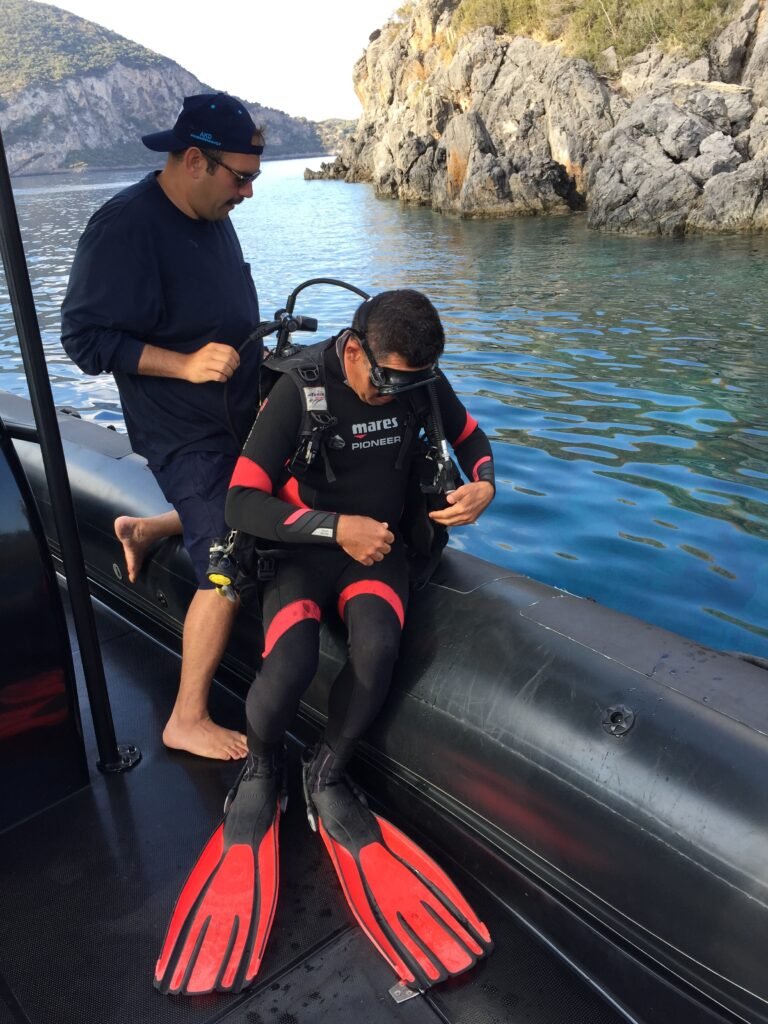
Under the water, the bay was being assaulted by several elements invisible to the naked eye. Trawlers were scraping the sea-bottom, ripping up its reef ecosystems and coral cover which absorb atmospheric carbon dioxide and act as nurseries for marine life. Tempted by warming temperatures, invasive species from the Red Sea and Indian Ocean were simultaneously infiltrating the Mediterranean through the Suez Canal, chasing away local varieties and ranging as far north as the northern Aegean island of Mytilini. These factors had come together to ensure that, denuded of algae and largely barren of fish, Gökova Bay’s fish biomass had sunk to the lowest recorded in the entire Mediterranean.
Kizilkaya fought back by convincing local authorities to close half of the bay to industrial fishing and establish Turkey’s first Marine Protected Area in 2012. For his efforts, he was rewarded by threats and violence by the trawler lobby. But he persisted, organizing the local community of fishermen whose livelihoods had already collapsed.
“Think of Marine Fishing Zones as your bank account,” Kizilkaya used to tell the fishermen in an effort to convince them to see the value in their surroundings. “As long as you have them, there’s interest paying out.”
The impoverished fishermen formed teams of rangers who patrolled alongside the coastguard and helped impose fines on trespassers, and within years, there were marked improvements. Sharks began dropping in to breed, benefiting from the bay turning into a safe space after a ban on industrial fishing. The monkseal population increased from two to 19. Local fishermen saw their income soar by 300% as high fines kept out the trawlers that had formerly been hoovering up the bay’s fish stocks.
Kizilkaya integrated AI software to better monitor the fish and tell whether repeat sightings of rare species were of the same individual or separate ones. He presided over getting locals accustomed to eating invasive species like lionfish, first by serving it at local festivals and then by sending stocks to Istanbul’s Michelin-starred Mikla restaurant. The chefs loved the lionfish’s neutral-tasting flesh because it made a great texture on which to base complicated sauces. Soon Gökova Bay’s fishermen were supplying 7 tonnes annually to 40 high-end restaurants around Turkey.
The market price of invasive species skyrocketed, even as the rebound in the bay’s fish-stock resulted in their share of total catches dropping from 35% to 3%. When Kizilkaya saw a supermarket chain in the deepest Anatolia selling frozen lionfish, he knew he had won his bet.
“When you stop pollution, the system comes back immediately,” he told Turning Point magazine. “But even if you start a marine-protected area today, it would take decades for the biodiversity to come back.”
Although Kizilkaya is more ambitious and optimistic than anyone I spoke with on the Greek side, he recognizes that the war against climate warming is unlikely to be won. He tends to think tactically and locally. Gökova Bay is a rare success story in the Mediterranean, but the sea at large is accelerating towards becoming a tropical sea where the biomass of invasive species surpasses 30% of the sea’s total biomass. Rising heat is blanching corals and driving sea life to the somewhat cooler depths.
“While before we used to dive up to a depth of 40 metres, the Med now only really begins beyond that depth,” Kizilkaya sighed. “We’ve already passed the point of no return and there’s nothing we can do in temperature terms other than brace for the heat and prepare ourselves for wildfires and the loss of biodiversity.”
Valuable organisms containing rare earth metals that took thousands of years to develop may be scraped away without scientists ever having had the chance to understand what role they played in the underwater ecosystem.
“How can we go and kill organisms we don’t know or haven’t even heard of?” Kizilkaya asked incredulously. “First there should be detailed independent research into what would be the effects of stirring them up because otherwise it’s as if there was life on the moon and we went and destroyed it.”
What can be done, Kizilkaya believes, is to lock off large swathes of fully-protected areas from any kind of extractive human activity so that they can function as marine emergency footpaths for sea life.
“All we can do is save some very important, deep water biodiversity hotspots that are accessible within the travel-ranges of most species so they can act as ecological support.” Kizilkaya said. “But even if you’re very serious about protecting them, marine protected areas take ten years to form.”
Do we have ten years? The accelerating flurries of diplomatic activity in the Mediterranean, even as the Persian Gulf and Black and Red seas burn, suggest not. With world leaders openly talking of a global conflict just round the corner, what is to happen to the seas that we hardly got to know?
Little has emerged about the Greek government’s two marine-protected areas in the Aegean and Ionian seas other than that trawlers will be restricted from them. Fishermen like Daoultzis, whose life depends on the sea, find it hard to embrace Kizilkaya’s big picture.
“You’ll dive in the sea in the marine-protected areas and behold a perfectly-preserved aquarium,” he said. “But what about the societies around them, what will you do with those?”
Iason Athanasiadis
Iason Athanasiadis is a Mediterranean-focused multimedia journalist based between Athens, Istanbul, and Tunis. He uses all media to recount the story of how we can adapt to the era of climate change, mass migration, and the misapplication of distorted modernities. In 2011, he received the Anna Lindh Foundation’s Mediterranean Journalism Award for his coverage of the Arab Spring and its 10th-anniversary alumni award in 2017 for his commitment to using all media to tell stories of intercultural dialogue. He is a contributing editor of The Markaz Review.